
Oh, how many years we’ve waited for this. How many times have we rewatched the first three films, holding our breath as Pinhead delivered his chilling line: “We have such sights to show you…” How many times have we reread Clive Barker’s The Hellbound Heart, trying to grasp that fine line between pain and pleasure—a line the author blurred with such mastery? And now, nearly four decades after the original film’s release, something happened that no one dared to believe in anymore: Clive Barker’s Hellraiser: Revival.
It is the first full-fledged interactive adaptation of this cult universe, created by Saber Interactive and Boss Team Games with the direct involvement of Clive Barker himself. Sounds like a dream, right? Alas, like most dreams, this one turned out to be far less perfect than we had imagined. But let’s take things one step at a time.
They say that what we cannot see is what scares us most. Many horror works lean into this, showing us absolutely nothing. But there is another way to instill fear—one rooted in the spirit of Sodom and Gomorrah. In Hellraiser: Revival, much like in Resident Evil: Requiem, there is no distinction between terror and lust; they go hand in hand. Here, you’ll find a cocktail of nudity, black leather, spreaders, whips, hyper-detailed gore, blood, and carnal desire, stirred into one utterly repulsive game.
It’s “eyes wide shut” but not for the “normies”; it’s pure, unadulterated, dialed-up-to-eleven trash. Fans of the Hellraiser franchise weren’t the least bit surprised, while everyone else was left wide-eyed, stunned by such sheer audacity. The developers set out to evoke disgust, and in that regard, they’ve done their job well. But that doesn’t really tell us anything about the game itself.
For the Cenobites, there is no longer any distinction between pain and pleasure. It is a single, continuous experience that they seek to explore in its most extreme manifestations. Pain is not a punishment, but a tool for discovery and a path toward enlightenment. Their mutilated bodies are not the result of retribution, but the embodiment of their philosophy and the journey they have undertaken. Grasping this credo is crucial; without it, the game devolves into a mindless slaughter, whereas with it, it becomes a tragic tale of how far a human being can go when driven by obsession.
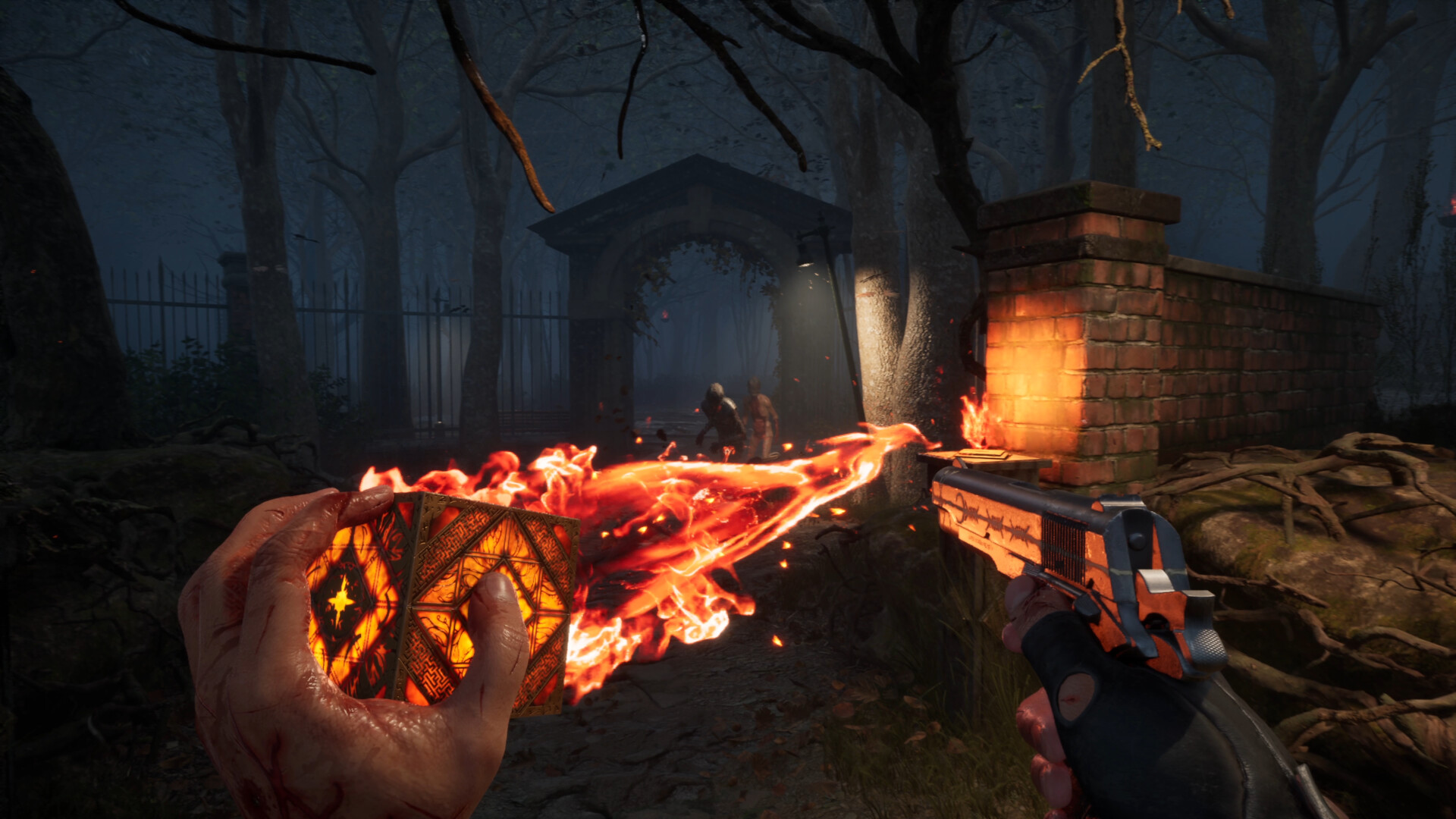
We play as Aidan Lynch—a biker, a hedonist, and, frankly, not a very pleasant fella. His life is an endless pursuit of thrills: drugs, crime, and extreme, transgressive sex. Together with his girlfriend, Sunny, he plunges into a “hellish vortex of depravity” until, one day, they come into possession of the Genesis Configuration, a puzzle box that opens the gateway to the Labyrinth.
Driven by curiosity and a craving for new sensations, Sunny decides to incorporate the box into their sexual encounters. Before long, the Cenobites are literally tearing her apart, while Aidan finds himself held captive by the Scarlet Church, a cult that worships Leviathan and covets the power of the box. Thus begins his long, bloody, and incredibly convoluted journey.
The game doesn’t shy away from the topics of addiction, including substance abuse, as well as violence, intimacy, pleasure, and pain. While the narrative ostensibly centers on the classic trope of rescuing a beloved as a device that serves primarily to motivate the player, it is a profoundly dark and complex story about self-deception. It examines a form of “love” that is, in itself, just another way of lying, both to oneself and to the person for whom one harbors feelings.
As Aidan delves deeper into his quest to save Sunny and as he reflects on her and their relationship, it becomes increasingly clear, both to the player and to Aidan himself, that what they shared was not love. It wasn’t even passion; rather, it was a compulsion, a desperate attempt to fill an inner void, akin to the effects of a drug.
The antagonist, Colin Marlowe, also believes he is in the right, even going so far as to claim a prophetic, divine status in his quest to satisfy a craving for knowledge and power. Yet, he is fundamentally mistaken, a fact the Cenobites themselves point out to him. Throughout the narrative, several distinct, parallel subplots reinforce the central theme: for instance, characters who will stop at nothing for a dominatrix who has no use for them, while she in turn remains fixated on someone who long ago ceased loving her. The signature style of the iconic author shines through, despite a rather simplistic premise and an abundance of clichés.
At times, however, the delivery is overly blunt, with concepts spelled out explicitly through dialogue and exposition provided by nearly every other character.
It is worth noting that Revival draws direct inspiration from the first three films and the novella The Hellbound Heart mentioned in the intro. The game’s events take place roughly 20 years after the original film, yet the plot stands on its own, requiring no prior knowledge of the original trilogy’s complex twists and turns. Thematically, however, the game continues the legacy Barker established: a cycle of desire, betrayal, and obsession.
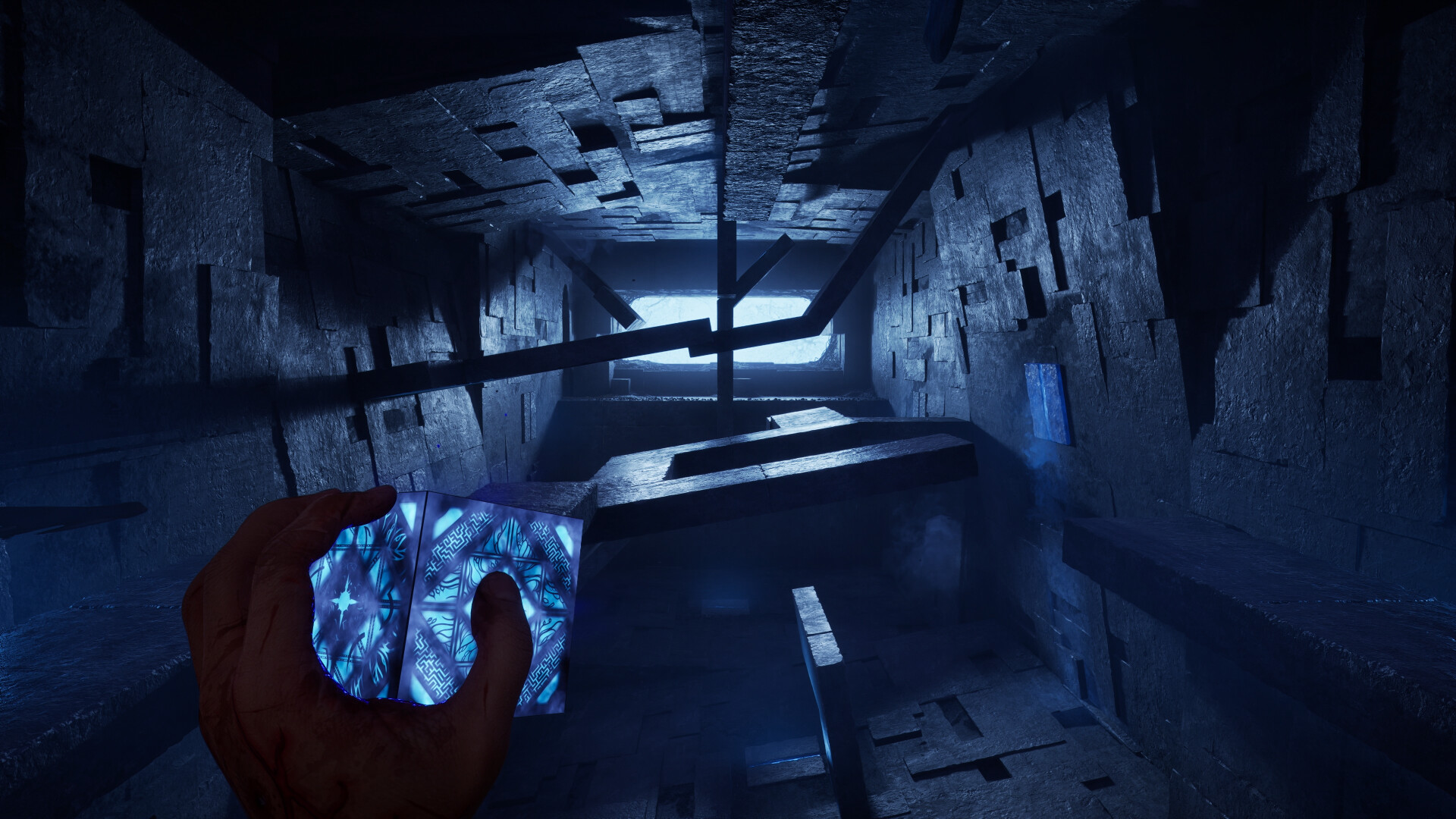
The Labyrinth, the very place we’ve seen in films but could never truly experience. In Revival, it manifests in all of its surreal, claustrophobic splendor. The developers didn’t merely replicate the sets from the movies. Oh no, they expanded upon them, imbuing them with details that could never have been captured on screen.
Endless corridors of black stone and rusted iron are bathed in a cold, blue light that seems to emanate from the walls themselves. Chains hang from the ceilings: some motionless, others swaying, and some moving of their own accord, dragging hooks and blades that catch the light. The geometry here defies the laws of physics, angles that ought to meet at ninety degrees instead splay into sharp points. Rooms rotate slowly, grinding stone against stone, and the floor beneath one’s feet never feels entirely solid.
Among the sub-spaces of the Labyrinth, the Hall of Chains stands out. It is a vast, cathedral-like corridor where chains hang in dense curtains from a ceiling lost in the darkness. Their hooks and blades constantly collide, producing a persistent metallic whisper, akin to a prayer recited in the language of rust. Then there is the Rotating Chamber, a circular room with walls studded with surgical instruments and hooks, all slowly revolving around the central axis while the floor remains stationary. It is disorienting, causing one to lose all sense of direction, as exits appear and vanish as if by magic. The Bottomless Pit is an abyss stretching into the heart of the Labyrinth, traversable only by way of slippery, swaying chains.
But the Labyrinth is more than just architecture, it is a state of being. It has no concern for human narratives of salvation and exists solely to reshape itself around intruders. Its goal is to disorient, ensnare, and ultimately claim those who dare to enter. Time flows differently here, and the Labyrinth can stretch mere moments into an eternity. Nothing here is safe to touch, and nothing remains where you last left it.
At first, the scattered, mangled bodies effectively build tension and an eerie atmosphere. It feels bold and fresh, even for the survival horror genre. Yet, around the midpoint, you begin to realize that the environments are cluttered with an excessive, senseless amount of gore, corpses, and remains, to the point where your senses simply grow dull. The developers went overboard, and the sense of fear and unease all but vanishes.
And yet, Hellraiser still manages to surprise. Just as you start to grow bored while skulking through dark corners to avoid cultists, the game thrusts you into a new, expertly staged, blood-soaked sequence or a frantic chase segment.
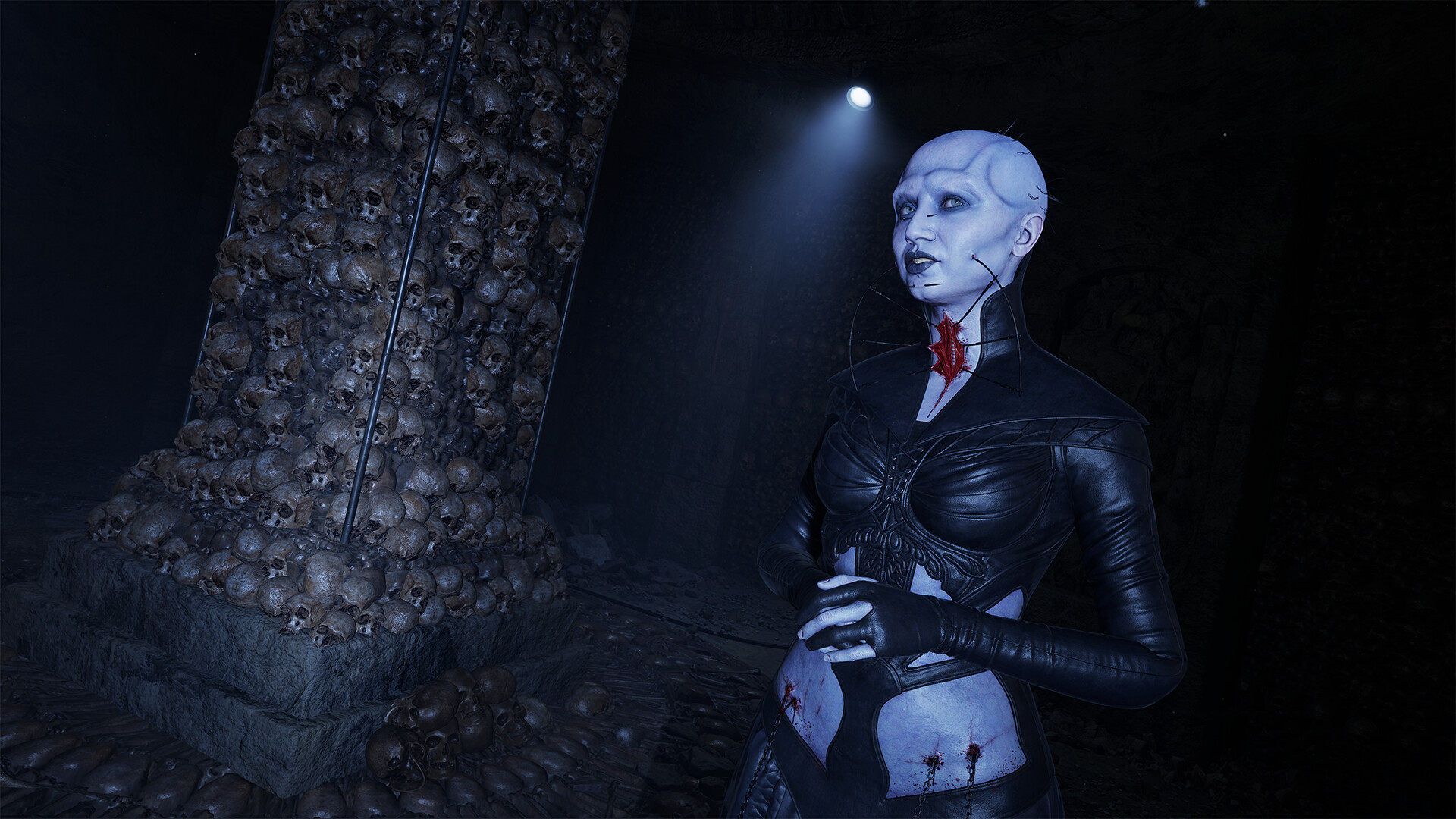
In Revival, the Cenobites are not bosses to be defeated by mindlessly clicking away until they expire. They are pursuers, threats, and constants. The developers have treated them with respect. Pinhead (with Doug Bradley returning to his iconic role) is not a final boss. He is a guide, a tempter, an observer that emerges at key junctures, proposes deals, utters his cryptic lines, and then vanishes, leaving Aidan alone with his own personal demons. This is the right approach, Pinhead was never merely a villain; he is a force that tests the limits of human endurance and lays bare one’s true essence.
The Chatterer is the one who will become your nightmare. This Cenobite, devoid of eyes or lips and possessing teeth that clatter incessantly, serves as an unrelenting pursuer. To survive, you must flee, hide, and use your environment to your advantage. His presence is a physical sensation: the sound of his teeth clicking, echoing through the corridors, becomes the harbinger of approaching death. Even once you’ve learned his patterns, the fear remains. It captures that very same “chilling dread of being caught” that we remember from the films.
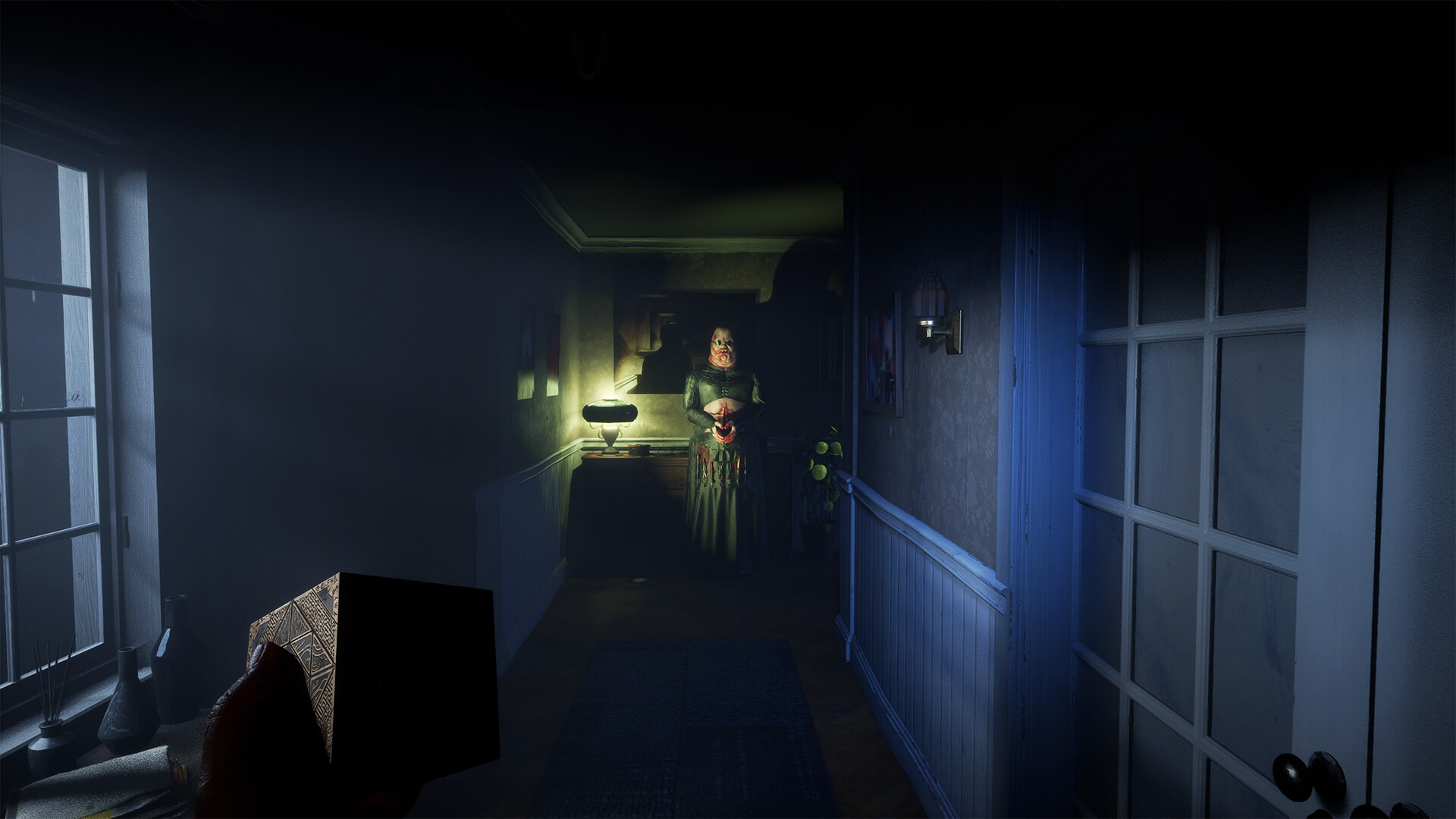
Butterball is another Cenobite who makes a return in the game. His massive, scar-covered frame with hooks driven deep into his flesh makes him both visually repulsive and physically menacing. While not as swift as the Chatterer, his attacks are devastating, and his presence within the narrow corridors of the Labyrinth evokes a claustrophobic sense of hopelessness.
However, the Cenobites are not the only threat you will face. The Scarlet Church is a cult led by the charismatic Marlow, who seeks to use the Genesis Configuration to commune with the Cenobites and forge his own “depraved paradise.” The cultists are fanatics, perverts, and murderers who view pain and suffering as a path to enlightenment. And they are far more than mere cannon fodder. They have their own leaders: including the Sister of Mercy, a deformed monster who is immune to all your attacks and capable of killing you instantly upon discovery. She cannot be defeated in a direct confrontation; you must slip past her using stealth, applying everything the game has taught you. And this is brilliant, because it transforms the familiar “find a vulnerability and attack” formula into pure survival horror.
Then there are the “Unworthy”, former humans who used the Genesis Configuration to escape their dark fate only to end up as monsters. They add another layer of tragedy to an already bleak world. There is a further layer of irony here: the Scarlet Church worships the Cenobites, imagining that their torments will lead to transcendence—while the Unworthy reveal what such an aspiration can truly result in, should those higher powers choose to refuse.
The Genesis Configuration is more than just a plot device, it is a core mechanic. The box grants Aidan supernatural abilities to hurl circular saw blades and nails at enemies, absorb and unleash fire, manipulate the environment to open new paths within the Labyrinth. Later on he can also summon the very hellish chains that once tore Sunny apart. It draws power from the suffering of your foes, the more pain you inflict, the more potent your attacks become. This fits perfectly with the Hellraiser philosophy: pain is fuel, and suffering is power.
However, much like many other aspects of Revival, this system feels rather underdeveloped. Telekinesis is limited to specific, pre-marked objects, and their quantity within any given level is strictly capped. If you spot an interactive object, you can be certain that enemies lie ahead, the game communicates with you through its design, but it does so far too bluntly. The ability to command fire is restricted to specific scripted moments, while the ultimate ability appears exactly once, during the tutorial, and is never needed again. It’s a shame, as the potential is immense, yet the execution falls quite short.
The combat system is a brutal, bloody dance. You can parry, dodge, land heavy or light strikes, wield firearms and exploit the environment, for example by detonating explosive barrels or triggering traps. Melee weapons break quite rapidly, though ammunition isn’t always in short supply, meaning you only occasionally have to improvise. The enemies are resilient and aggressive, yet they are surprisingly forgiving of player mistakes. Only on the harder difficulty setting does the game truly become a test of survival.
Melee combat here is more engaging and varied than in the recent Silent Hill: Townfall, clashing with blades and clubs against half-naked fiends makes up nearly a third of the gameplay. Enemies may wear various pieces of armor that must be broken, or you can target exposed areas, forcing you to stay active even when facing standard foes.
Firearms, unfortunately, feel like toys and sometimes lack impact; as you approach the end of the game, they increasingly overshadow everything else. A randomizer affects nearly half of the items you find, which means you’ll often have to scour every corner in search of ammo and resources—a common genre trope, though one that disrupts the pacing.
Cultists constantly converse with one another, they have a wide range of dialogue, react to the corpses of their comrades and to ambient sounds, and shout threats at the player. Despite some uneven mechanics, the action can be spectacular and the gunplay looks better than in many other titles built on the Unreal Engine.
Your inventory starts with a limited number of slots for items and weapons, but you can find expansions as you progress through the game. They will increase your inventory space, but… don’t get your hopes up too high: being able to fit just two new bandages and a box of ammo into your inventory isn’t exactly thrilling. The incentive to hunt for these pouches vanishes, and the satisfaction of obtaining such an upgrade is lost.
The weapon upgrade system is a whole other story. You find modules that can be attached to or removed from various guns to boost their stats. You can also craft ammunition, medkits, repair kits, traps, and even fuel canisters. But why bother? There’s always plenty of ammo, and if you run out, the game just tosses some into the nearest crate. Crafting requires resources scavenged from every corner, as well as the time spent looting. You end up painstakingly searching an entire area, gathering bits of cloth, springs, and chemicals, only to craft a grand total of three bullets. It’s a great way to kill any sense of excitement; you spend twenty minutes gathering resources just to get three rounds. It’s poorly balanced—and frankly, it’s just annoying.
Puzzles are another major component. You’ll encounter plenty of them: searching for passwords and safe codes, hunting down keys shaped like rubber ducks (yes, really—some are BDSM-themed, others are just silly), and cracking safes using a mechanic similar to the one in Skyrim or the first Dying Light.
I should also note that the Genesis Configuration can be used to alter the geometry of the Labyrinth to create bridges across chasms, open doors, and change rooms. These are trippy, surreal moments that force you to see the world in an entirely new light.
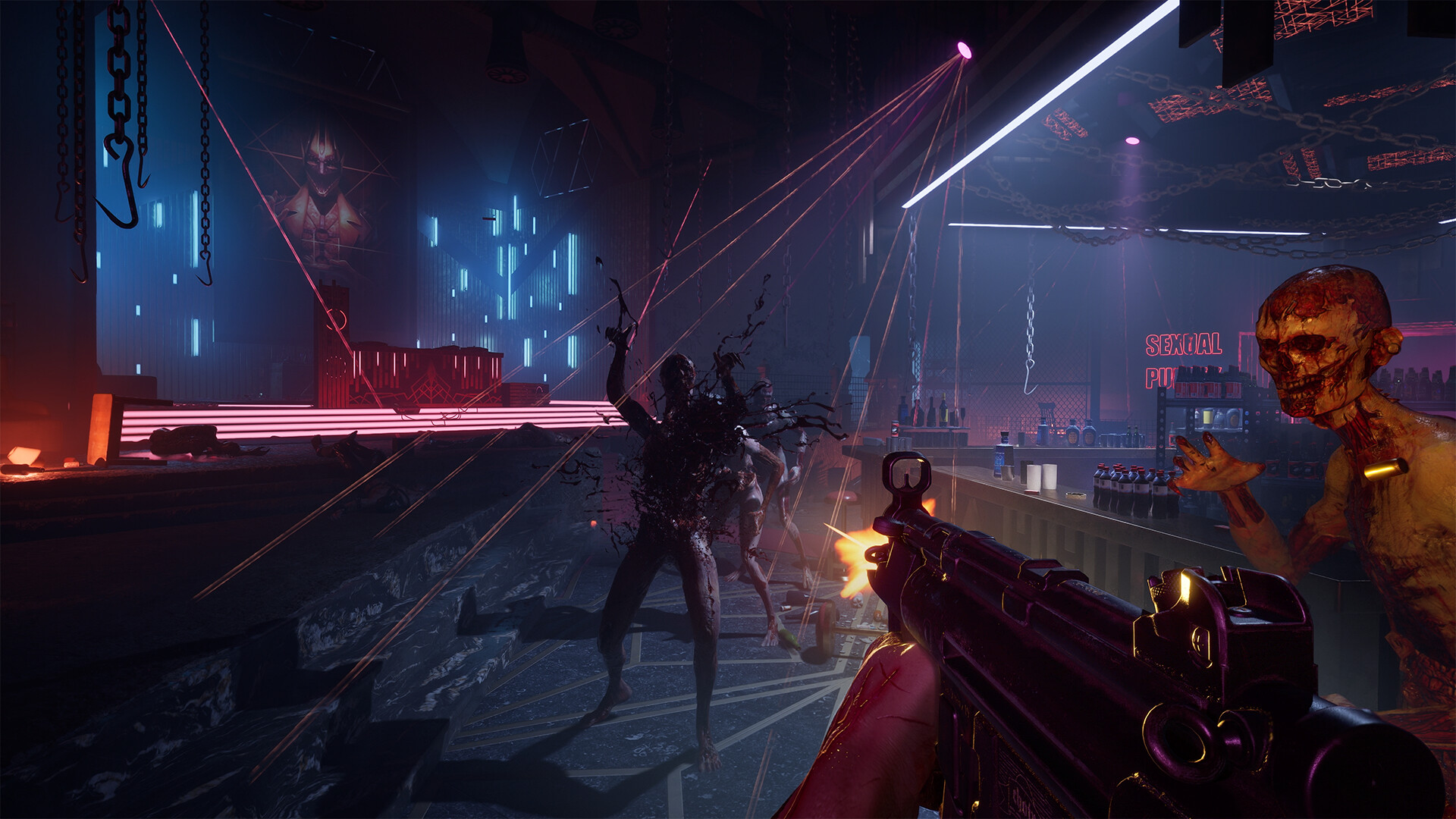
The locations are a whole other story. You’ll visit Aidan and Sunny’s apartment, the Crimson Church, dungeons, sewers, a forest, a graveyard, a mansion, an art studio, a sex club, and, of course, the Labyrinth. Each location is well-crafted and atmospheric, though some can feel a bit monotonous. The sewers are just dark corridors filled with water and pipes; the forest is nothing but trees and fog; the graveyard consists of headstones and crypts. They serve their purpose, but they don’t leave the same lasting impression as the Labyrinth or the church.
The sex club is a different beast entirely. To gain access to the VIP area, you have to track down three items: a leg spreader, a spanking paddle, and a massive dildo (affectionately dubbed “Cthulhu” by players). You bring these to a woman dressed in latex; she turns around, you secure her with the spreader, give her a few whacks with the paddle, and then hand over “Cthulhu.” And no, that’s not a joke—it’s an actual, functional game mechanic. It’s precisely this that has earned the game a 95% approval rating on Steam. Players are willing to overlook the bugs, the dull combat, the repetitive bosses, all for the sake of this aesthetic, these vivid images, and this sheer audacity.
It’s a shame, though, that this boldness is mostly confined to the beginning of the game; later on, things tone down and become a bit more polished. While the nudity and violence don’t disappear, they also don’t evolve into anything truly Cenobite-esque.
As for the bosses… well, that’s a whole other source of pain. The “Diarrhea Boss” (as players have dubbed him) appears twice; both times, you simply circle a table, unloading everything you’ve got into him, with no real way to gauge how much health he has left. The final boss is a complete farce: you arrive with a full arsenal and leave with even more ammo, as the game simply wasn’t balanced for this volume of resources. It’s quite disappointing. A couple of the boss fights are repeated with minor tweaks, but at least there are bosses, and each one demands a different approach. And—miracle of miracles!—none of them feature those glowing, differently-colored pustules or growths that you have to shoot.

The technical state is a catastrophe. Bugs, flickering textures, audio glitches, a lack of checkpoints on the highest difficulty setting, and issues with save files—in one word, it’s a mess. On the PS5, things are particularly dire: the game crashes, stutters, and breaks. This is inexcusable for a project with a budget of two to three hundred million dollars. While patches have addressed many of these issues, I still encountered a handful of bugs during my playthrough, even after the updates. Other technical rough edges persist: character models clip through walls, enemy AI occasionally acts dim-witted, and various minor visual glitches pop up. On PC, without anti-aliasing, the game looks like a shimmering, glittery mess; however, it isn’t overly demanding in terms of system requirements, doesn’t crash every hour, maintains a high frame rate, and delivers a visually pleasing experience.
Clive Barker’s Hellraiser: Revival is a game that understands the essence of Hellraiser, yet doesn’t always know how to translate that into a solid gaming experience. When it works—capturing the atmosphere of the Labyrinth, the chases involving the Chatterer, the Configuration of Genesis, or the return of Pinhead—it is magnificent. When it stumbles through bugs, dull combat, or irritating mechanics, it is deeply disappointing. It’s not Resident Evil, nor is it Silent Hill. It’s something else entirely, grittier, more brutal, and more visceral. If you are prepared to embrace this filth, to dive into it and get your hands dirty, you might find something truly unforgettable here. If not, the puzzle box remains closed, and perhaps that’s for the best. After all, some doors are better left unopened.
Hellraiser: Revival is a highly inconsistent game. It contains far too many awkward gameplay segments, moments designed as if you aren’t even meant to get through them on your first attempt. The game lacks variety in its enemies, the intrusive aim-assist often hinders rather than helps, the stealth mechanics break down too easily, and once enemies spot you, they always know exactly where you are. There is a notable lack of large-scale sequences; the whole experience feels like a very intimate, small-scale story, even though it arguably shouldn’t be. But are the low scores given by critics justified? Not entirely. Does this mean the high user ratings are deserved? That depends on the context.
Much like the franchise as a whole, originally conceived by Clive Barker, the game is by no means a mainstream product. Right from the start, it presents a wealth of unsettling, frankly depraved, and disturbing content; this isn’t the “safe,” pop-culture-friendly horror that many have gotten used to. It aims to shock and unsettle through its unrestrained nature and by tackling subjects that are typically considered taboo in media, while the gameplay itself manages to be genuinely entertaining, delighting in all sorts of bloody, horrific spectacle. As a work of art, it actively seeks to push the boundaries of what is permissible, inviting reflection on themes that are terrifying (and at times, repulsive) yet deeply philosophical.
So, who is this game for? The fans of the franchise, those willing to overlook the technical flaws just to return to Barker’s. It’s for those who appreciate body horror in its most extreme form, and for those who don’t fear meeting their end at the hands of the Chatterer in some dark, narrow corridor.
Everyone else should steer clear. This box opens doors, but what lies beyond isn’t just pain and pleasure, but also disappointment. And, much like the Lemarchand Configuration itself, the price may prove too high.


