
“Life isn’t a movie where you have to save the world. Life is an attempt not to drop dead yourself.”
This line hits you like a slap to the face. It greets you at the very start and haunts you throughout the twenty hours you spend trying to keep a girl named Ray afloat. Having survived Fear and Hunger—with its killer coin flips and severed limbs—and having conquered the Hollow Knight Pantheon with a single life, I thought I was unshakeable. I was wrong.
Sister Ray isn’t a horror game about monsters under the bed. It’s a horror game about you. About that split second when you decide whether to buy food for your sister or score a fix to stave off withdrawal. About the choice between sleep and work, between helping a friend and ensuring your own safety. The game doesn’t rely on jump scares; instead, it slowly, methodically suffocates you, forcing you to feel every second of this grim, gray, hopeless existence. And believe me, you will feel every moment of Ray’s pain, every ounce of her suffering and despair.
Behind this project is Evgeny Chugunov, also known as The Growing Stones. It is a man who single-handedly crafted one of the most poignant narratives of recent years. He had previously released a 2D adventure game and the visual novel Children of Mold, but with Sister Ray, he took a leap into the abyss. Development spanned several years, and the creator approached the subject matter with serious dedication: reading books on addiction, watching films, and immersing himself in the grime to portray it without sugarcoating.
He drew inspiration from Disco Elysium, Persona, and Vampire: The Masquerade – Bloodlines. And yes, comparisons to Disco Elysium are inevitable, both in terms of visual style and narrative depth. But if Disco Elysium is a philosophical treatise on politics and the soul, then Sister Ray is the scream of a soul trapped in a cramped apartment, suffering withdrawal and surrounded by expired food.
The game was released on June 1, 2026, and instantly garnered 93% positive reviews on Steam. And that comes as no surprise. Yet there were controversies: some accused the game of romanticizing drug use. Nonsense. Play it to the end, experience that agony firsthand, and you’ll realize: it is the ultimate anti-drug statement.
Everything starts with a phone call, piercing, like an electric shock. It’s Marta, a friend with whom Ray has just spent six days on a relentless bender. The voice on the line sounds strange, tinged with a forced cheerfulness. Then comes the news that makes the world around her swim: Ray’s father is dead. He crashed his car into a truck, killing himself and his new wife. Ray hadn’t spoken to him in ages; her parents had divorced, and her father had built a different life, a different family. Left behind is a girl named Lilah—Ray’s half-sister—who is about to be sent to an orphanage. Marta, without a second thought, suggests: “Take her in. You get money for guardianship. Besides, only junkies and lowlifes come out of those homes.” Then, almost as an afterthought, she proposes they “pop some Eph and something a bit more interesting” that evening. Ray agrees.
What follows are six days that blur in her memory, leaving behind nothing but a sticky sense of shame and an empty wallet. Then comes Monday. Ray wakes to the sound of a phone call. This time, it’s a social worker on the line. The voice is dry and official, carrying a note of barely concealed disgust. She needs to come in today, fill out the paperwork, and pick up Lilah. But Ray can’t string two words together, withdrawal is crashing over her, her body is shaking, and her thoughts are a jumble. She calls Marta, who advises: “Find Sandman and get some pills from him. You won’t even make it to the social services office without them.”
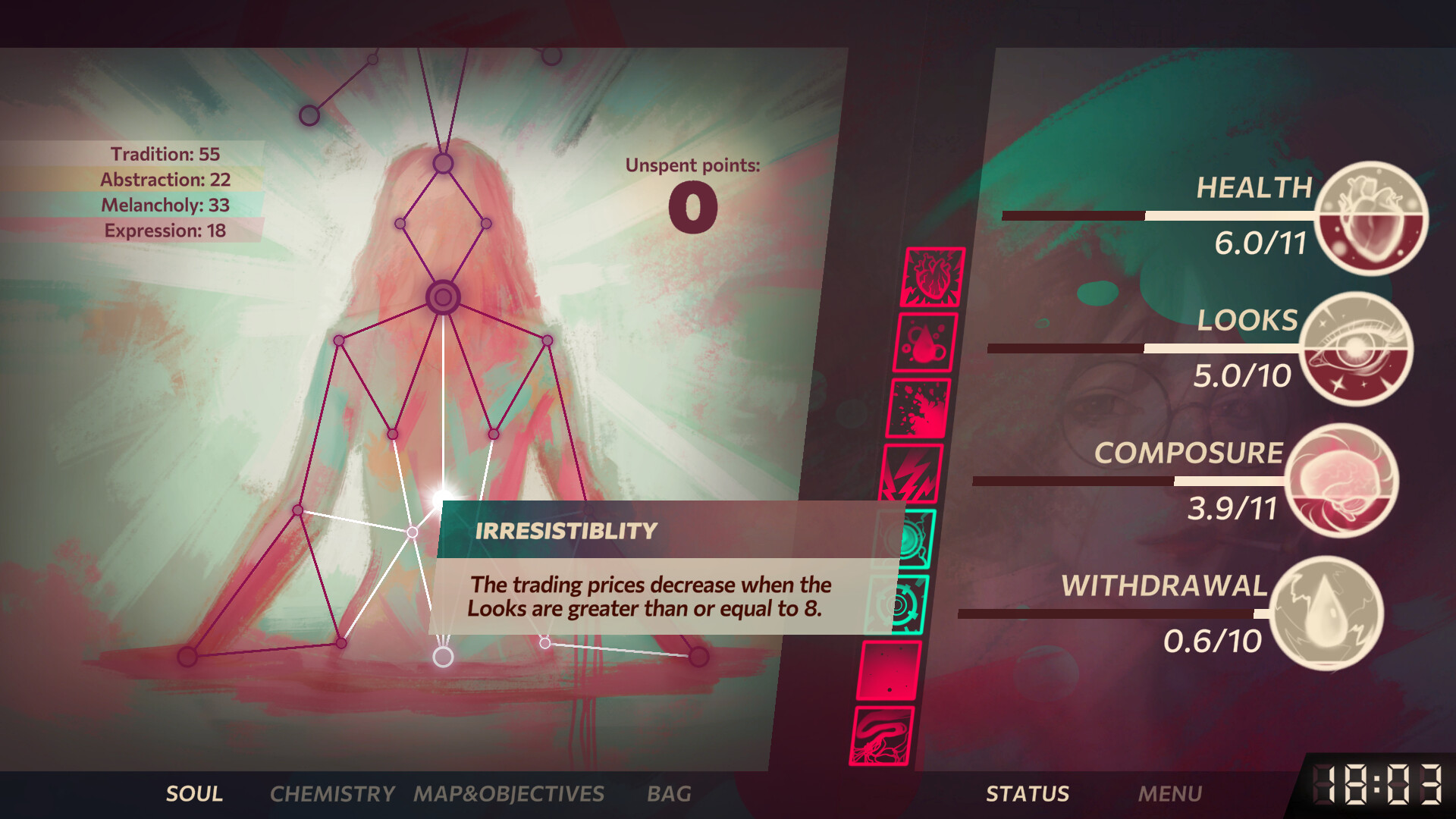
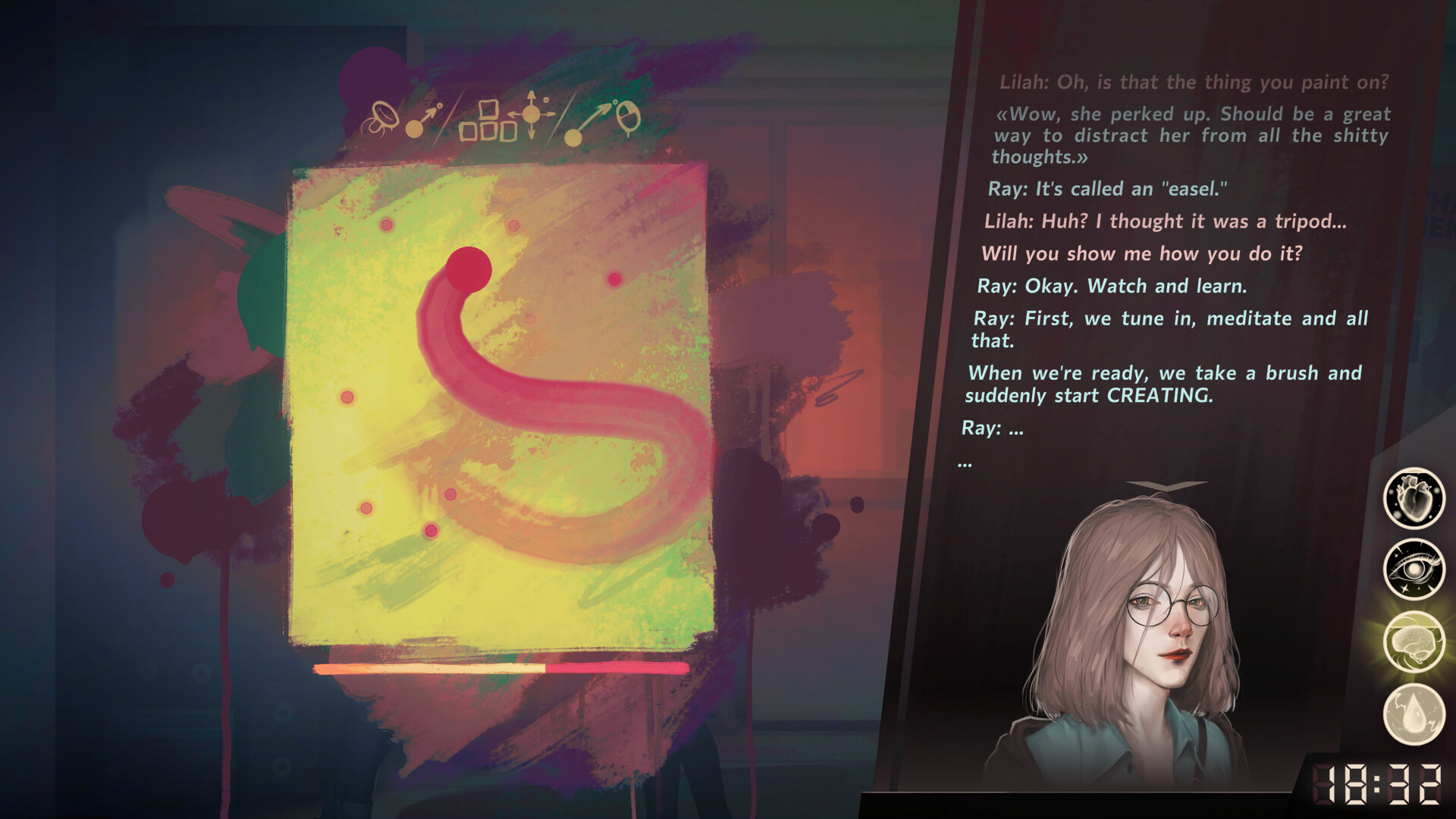
Ray finds Sandman just around the corner. He’s a strange guy in a blue jacket who mistakes her for some “Mary from Green Street.” She plays along, takes what he offers, and the world around her explodes with color. High but alive, she heads to Child Services. She signs the papers and collects Laila. The girl is frightened and wary, but once home, she perks up a bit upon seeing an easel. She asks to be shown how to draw. Drawing here isn’t just a hobby; it’s a key game mechanic. It’s a mini-game where you have to collect orbs against the clock, but the quality of the drawing depends on skill upgrades in the “Soul” tree: tradition, abstraction, melancholy, and expressiveness. At first, the result is a sloppy mess, a comical disaster.
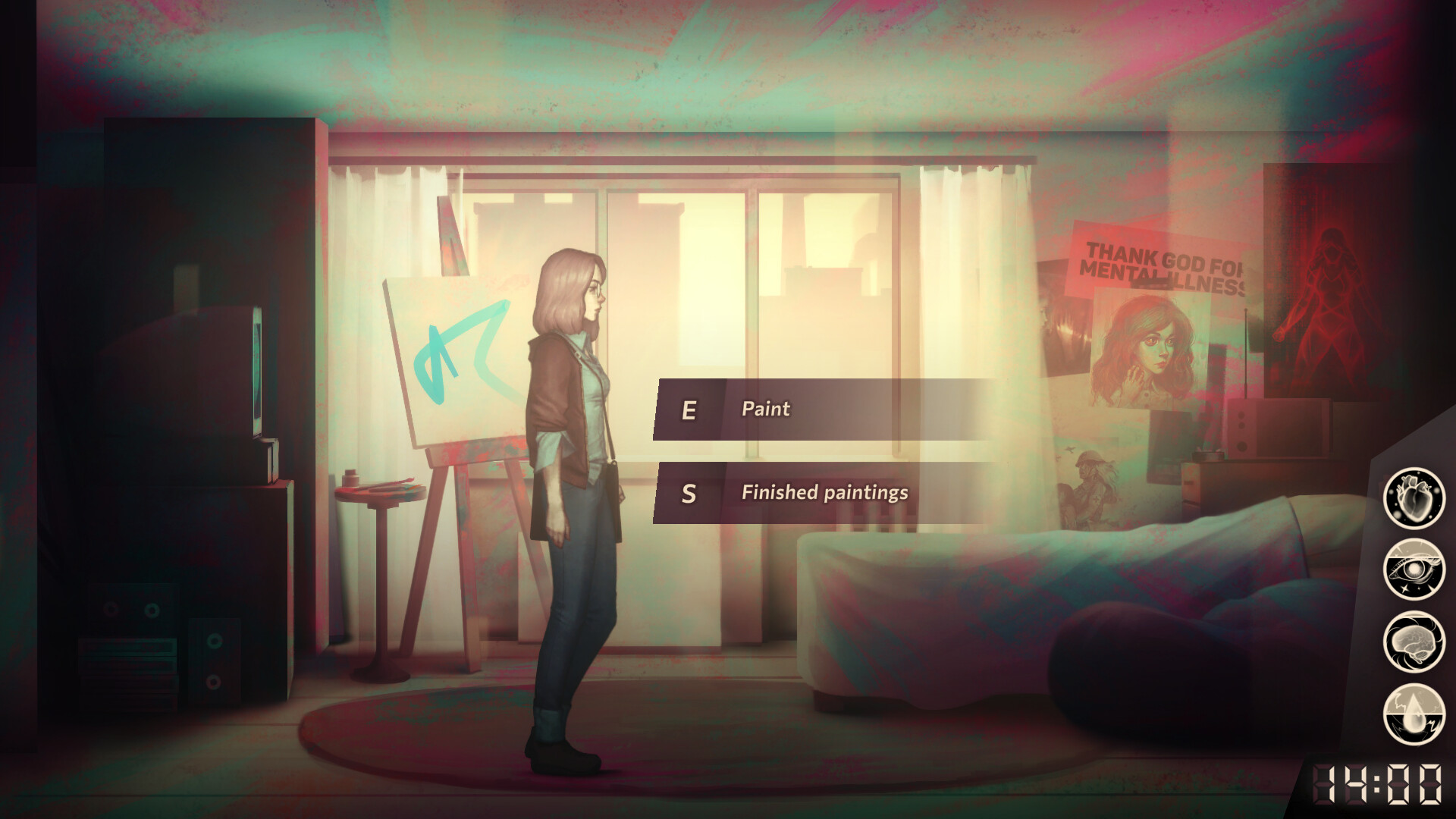
But art is a luxury, and life demands money. Ray learns she has two weeks to pay the rent or face eviction. There’s a demand in the mailbox: $100 due by the end of the month. Work? Sell paintings in the park? But her hands are shaking, withdrawal is setting in, and pills are expensive. Day by day, Ray sinks deeper into a vicious cycle: earn money, buy a fix, stave off withdrawal, earn money again. Over and over, she drags her life further toward rock bottom.
All around her are real, gritty, living people. Each one is a shard of a shattered life. There’s Martha, a friend who drags Ray down but is also the only one who understands what withdrawal feels like. Then there’s Candy, a sixteen-year-old homeless addict. She asks to crash at Ray’s place, but Ray is afraid to let her in, Prudence, the local hellhound from Child Services, is due for an inspection.
Prudence is a nightmare in her own right. A tyrannical old woman who worked at the school back when Ray was a student. She comes by for inspections on Saturdays, and if she spots anything amiss, Lilah will be taken away. Ray tries to act normal, but withdrawal symptoms give her away completely. One day, Lilah finds Ray’s stash. Another day, she starts smoking around the corner and hanging out with Maxl, a scrawny kid in glasses who deals in drugs. Ray tries to set her straight, but what kind of guardian can she be when she can barely stay on her feet herself?
Then comes the twist. Marta arrives at the park and asks a question that sends shivers down the spine: “What would you do if your life hung in the balance, but you could save yourself by sacrificing an innocent person?” Ray replies, “Save myself.” And Marta… turns her in to the cops. Right then and there. It turns out Marta had been working for the police all along, blackmailed and backed into a corner. She tries to change her mind at the last moment, but it’s too late. Ray is arrested right in front of Lilah. Marta drops dead from an overdose.
That marks the start of the main storyline: Ray must find the cook behind Susperia—a potent local drug that’s killing people. The cop blackmailing her hands over a list of suspects: Jude, Jimmy, Jack, Waldo, Maxl, and Sheila. Ray has two weeks to figure out who is cooking this filth. Otherwise, it’s prison.
Ray begins her investigation. She goes in circles, gathering rumors and risking her life. She learns that Sheila is selling pharmacy precursors; that Jack is unemployed yet flush with cash; that Jimmy is a hippie who was high on the day of the explosion; and that Maxl is a shifty small-timer who knows everything but keeps his mouth shut for a price.
At a club, Ray meets Waldo, a former drug addict who has switched to alcohol. He writes brutal fairy tales and is trying to get clean, but the past won’t let go; his girlfriend died of an overdose, and he blames himself. You can build a friendship with him and help him kick the habit.
The plot of Sister Ray is not merely a story; it is a confession. It is a cry for help that cannot be ignored. Every piece of dialogue, every choice, every death leaves a scar. The game affords you no margin for error, yet it grants you the right to choose. And every choice comes at a price.
Sister Ray is an explosive cocktail of life sim, RPG, survival game, and visual novel. But at its core, it is a simulator of agony.
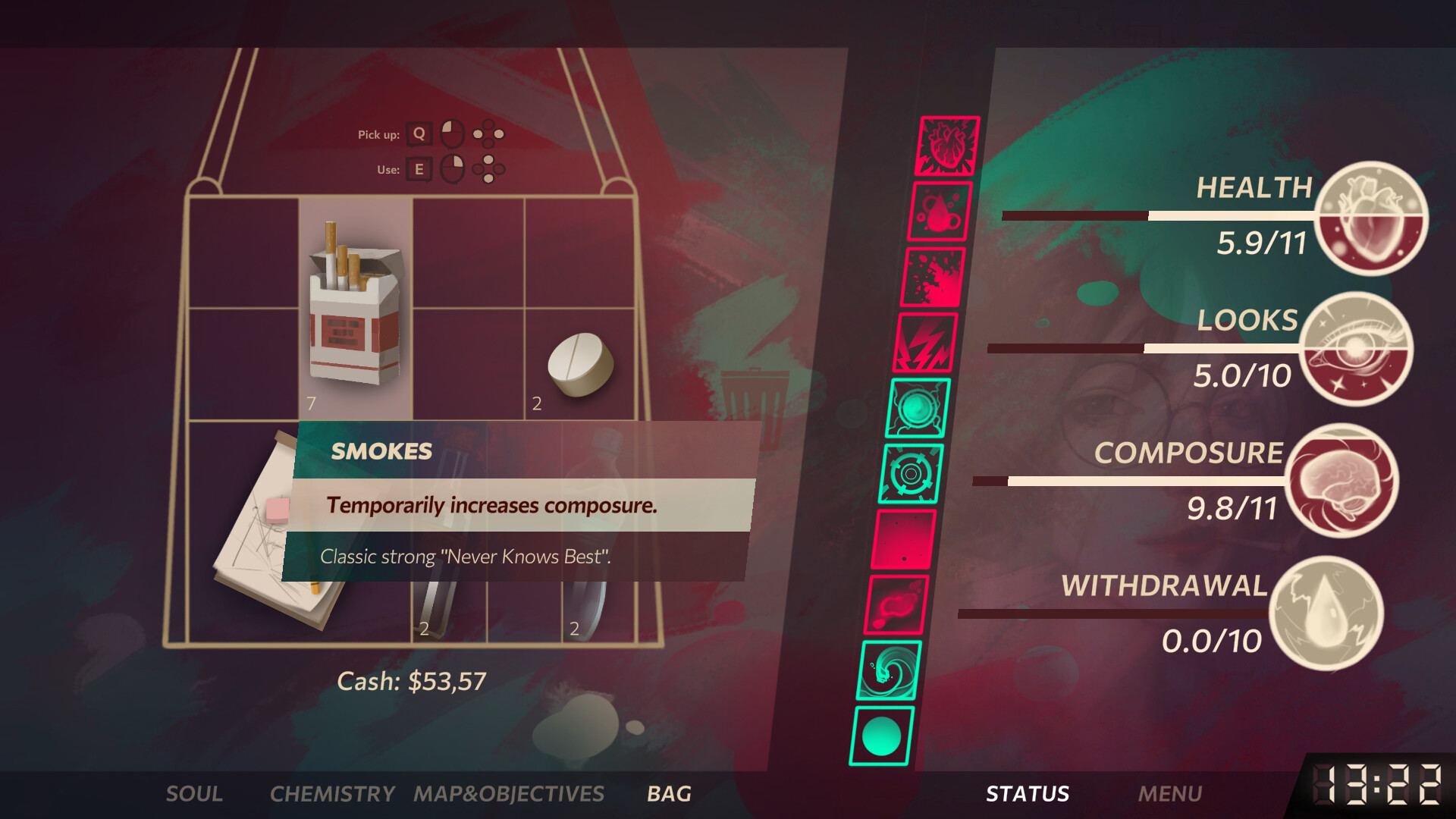
You have four key stats:
- Health. If it drops to zero, it’s game over. Simple as that. But keeping it up is a hellish task.
- Looks. It affects everything, from dialogue options to your ability to earn money. If you don’t wash or put on makeup, the world becomes even more hostile. You’re a nobody. You’re scum, and everyone makes sure you know it.
- Composure. If this hits zero, Ray loses her mind. And that’s not just a metaphor—we’re talking hallucinations, panic attacks, and a total loss of control.
- Withdrawal. This constantly rises. The higher it gets, the worse things become: shaking hands, nausea, tics, and an inability to concentrate. The only way to stave off withdrawal is to take a substance.
Substances fall into three categories: psychedelics, stimulants, and depressants. The names are fictional—methyldioxypam, Susperia—but the effects are described with chilling realism. Taking them offers temporary relief, but tolerance builds, and the side effects grow increasingly terrifying, ranging from headaches to heart failure.
Every action consumes time. The in-game day is finite. You have to manage to:
- Get Lilah to school.
- Earn money (by sketching in the park, cleaning, or selling blood).
- Buy food and pay the rent.
- Keep withdrawal at bay.
- Avoid losing your mind.
- Complete story quests.
- And, most importantly, hide your addiction from Prudence, the social worker who drops by for inspections. If she finds out, Lilah will be taken away.
The game gives you no breathing room, you are constantly under pressure and forced to choose between the bad and the terrible. Buy food for your sister, or a fix for yourself? Sleep or earn money? Help a friend or look out for yourself? These aren’t just gameplay mechanics, they represent a moral test that breaks you, inflicting so much personal pain and suffering on the player that it commands admiration. The game builds tension gradually, yet it mounts with each passing day; believe me, you will feel that tension hanging over you like the Sword of Damocles.
Endings: There are ten of them. And not a single one is happy. Yes, the game features ten endings. None of them offer a “happily ever after.” You either die of an overdose, go to prison, lose Lilah, turn into a criminal, or… simply keep existing, teetering on the edge.
Every ending delivers an emotional blow. You realize that every decision and choice you made, from whether to buy bread or a fix, to whether or not to turn a friend over to the police, led to this moment.
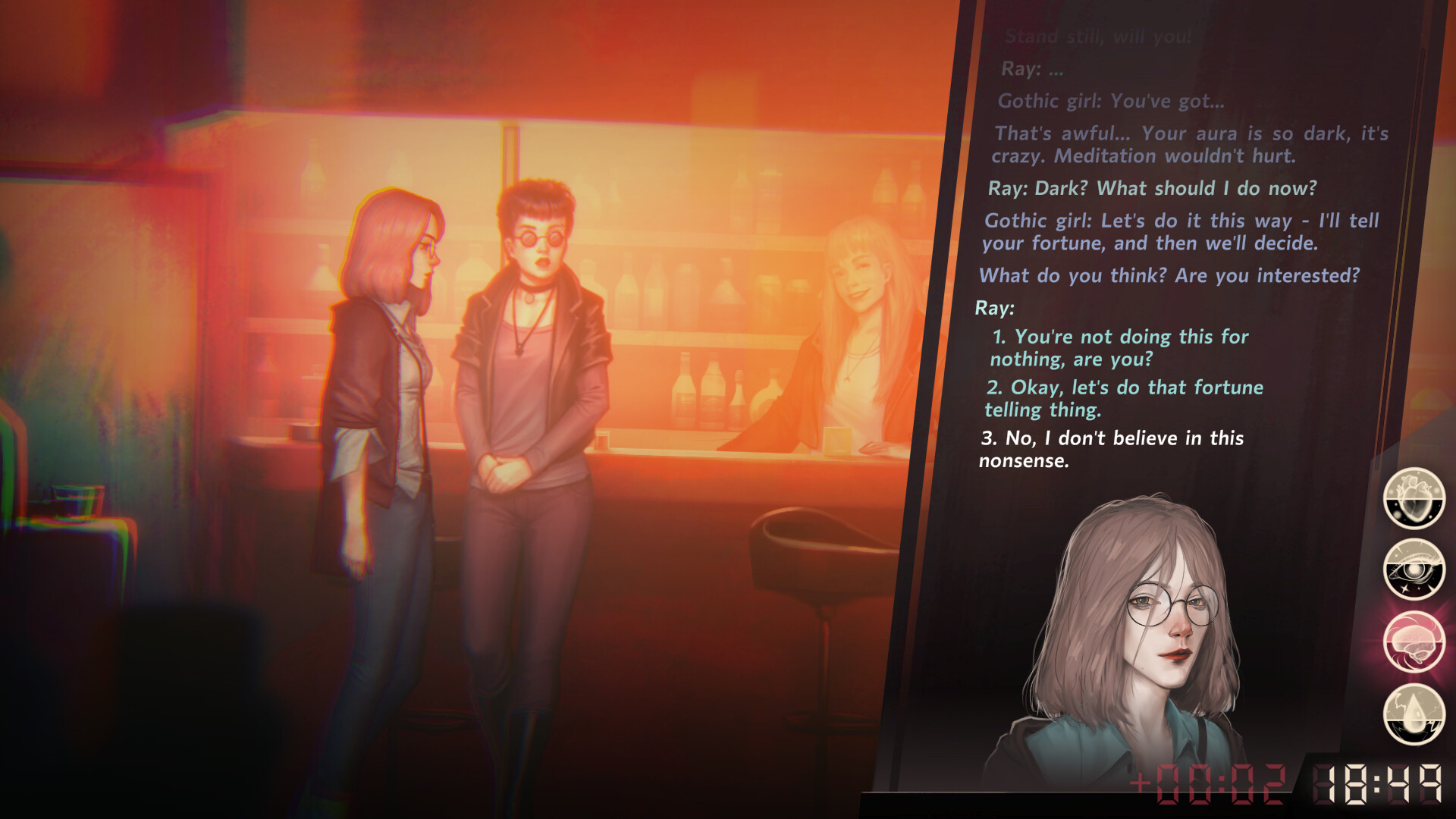
The visuals in Sister Ray are more than just a style; they are a visual language that speaks directly to you. The world shifts in tandem with Ray’s state of mind. When she’s high, the colors are vivid, rich, and almost cartoonish. Locations bloom, lines soften, and the light turns warm. But the moment withdrawal hits, the world dissolves into a gray-and-black mess. Lines fracture, shadows deepen, and details blurб as if you’re viewing the world through clouded glass.
Comparisons to Disco Elysium are inevitable with both games sharing that same style, those rough brushstrokes, and that distinctive use of color. Yet here, it isn’t merely an aesthetic choice but a storytelling tool. You see the world through Ray’s eyes; you feel her state of mind through the imagery.
The act of painting is a masterpiece in itself; the creative path is breathtakingly beautiful—though still gritty, as mounting an exhibition requires not just creating masterpieces but also… staining your own body. Yet, it is in this process that the colors reveal their true depth and brilliance.
The voice acting is another triumph. The game features a cast of 50 actors, and you’ll instantly recognize the voices of Sergey Ponomarev and Sergey Chikhachev. The dialogue feels authentic, full of swearing, shouting, whispering, and weeping. There is no theatrical artifice here, just raw, unvarnished life. Famous VTubers and streamers also lent their voices to the project; it is a shame, however, that the audio is Russian-only—playing with English text while listening to such magnificent performances would have been an unforgettable experience.
The music, too, adapts to her state: soft and melancholic when Ray is calm, yet jittery and grating when she is suffering. The soundtrack doesn’t just accompany the game—it bears down on your psyche, forcing you to endure every minute of agony.
The game runs flawlessly on the Steam Deck, and the optimization is solid. However, there is one major downside: the save system. Save files overwrite each other; you can’t rename them, and there’s no way to tell which chapter corresponds to which save. This is a critical issue when you’re trying to unlock every ending by playing through the game multiple times.
Fortunately, the developer added a fast-forward mode in the July 1st update, which cuts down on replay time. So, if you decide to go for all 10 endings, the time investment won’t be such a big problem.
Sister Ray isn’t a game for entertainment; it’s a game for realization. It doesn’t romanticize drugs. It shows them exactly as they are—filthy, reeking, and deadly. It reveals how addiction destroys not just you, but everyone around you. It shows what goes on inside the minds of addicts, even those trying to get clean. It shows… and it is a harrowing emotional journey, one I won’t be rushing to revisit just to see a different ending.
I played through it once, a twenty-hour experience, and I have no desire to go back. Not because the game is bad, but because it is too honest. Too painful. Too real. In those twenty hours, it brought so much depression, anxiety, trembling, agony, and horror into my life that I certainly won’t be returning to it anytime soon.
It’s like a book you can’t put down, yet one that leaves you needing to step out onto the balcony just to breathe, smoke, have a drink, or talk to someone. It’s like a confession you never asked for, yet one that leaves a lasting mark.
I recommend it to anyone ready for a serious conversation. To those who enjoy Disco Elysium. And especially to those who think that “trying it once won’t hurt.” Play Sister Ray, and you might just change your mind.


