
Eastern Europe, vampires, and the developers of The Witcher 3, what an explosive cocktail! What could possibly go wrong? Just about everything. But not all at once. And therein lies the central drama of The Blood of Dawnwalker—a game that simultaneously hooks you with its atmosphere, infuriates you with its technical state, and forces you to ask uncomfortable questions about the experience itself.
It’s been a long time since I played an RPG where completing a side quest made me stop and wonder, was it actually worth the time? How will this affect the story? Will I fail something important while helping yet another peasant? In open-world games, time is usually just window dressing. The world is on the brink of collapse, yet the savior of the universe is out picking flowers for a +1 armor boost. The result? Immersion shatters, the narrative falls apart, and the game ends up gathering dust on the shelf.
The Blood of Dawnwalker, the new game from Polish studio Rebel Wolves, composed almost entirely of CDPR veterans, employs a global timer, and it works. Not as a mere checkbox or marketing gimmick, but as the actual backbone of the entire game. I’ve already spent about 30 hours playing it, and you can beat the story in about 20 hours, but more on that later. I really love what the developers have achieved here. The game isn’t perfect and there are certainly things to criticize, but I haven’t felt this level of immersion in a game world for a very long time.
You can tell the developers have experience crafting great RPGs, after all, who doesn’t know CDPR’s titles? And they’ve put that experience to excellent use here. In this game, your actions come at a price. And inaction is a choice, too.
The Tomaszkiewicz brothers are directly involved in this game. The lead director and the quest designer of The Witcher 3 finally teamed up outside of CD Projekt RED, founded the studio Rebel Wolves, and got to work. Notably, they spent just four years developing The Blood of Dawnwalker. By the standards of today’s AAA industry, that is—to put it mildly—very fast.
It all seemed quite promising: respected industry veterans with a track record of great games formed their own team, secured funding from the Chinese company NetEase, and gained the backing of the Japanese publisher Bandai Namco. Development took four years, with seemingly well-planned processes. Everything was on track for release.
Naturally, there was plenty of news. Everyone was flooded with trailers for The Blood of Dawnwalker because expectations were high that the brothers would finally create their dream game. After all, you play as a Witcher-like figure who roams by day—wielding magic but excelling at swordplay—while transforming into a vampire with paranormal abilities at night.
We were also told that time is a resource: “You have 30 days and 30 nights to save your family.” You make decisions and face fateful choices; in theory, you could just ignore your family and focus on leveling up, and the game would still reach its conclusion. What’s more, we were told that the characters would actually remember things. You’d have to make a huge number of decisions along the way—deciding who lives and who dies.
That meant constantly having to choose. Should I clear this map marker or that one? Should I rush over there, or focus on a task that offers more benefit—whether to my vampire self, my supernatural side, or my human persona? Because there are distinct progression paths alongside a general progression system that applies to everything.
All in all, it was shaping up to be an interesting game with a unique twist. But how would it actually work? As the release date approached, however, doubts about the game’s future began to mount. For one thing, the developers kept showing the exact same scenes, landscapes, and city streets. Then there was the combat system, which raised eyebrows, it felt like Kingdom Come all over again: you had to parry based on the direction of the enemy’s attack and choose exactly which side to strike from. It all felt a bit baffling, leaving the impression that the system might eventually become a real chore.
On top of that, the developers described the setting as “grounded fantasy,” implying that enemy variety would likely be minimal. Then the reviews started coming in, with even the glowing ones mentioning that the game feels stifling due to repetitive activities and battles against the same types of monsters—or humans, assuming you can even find a monster to fight. Because mostly, you’re just fighting bears, wolves, and people. And boars.
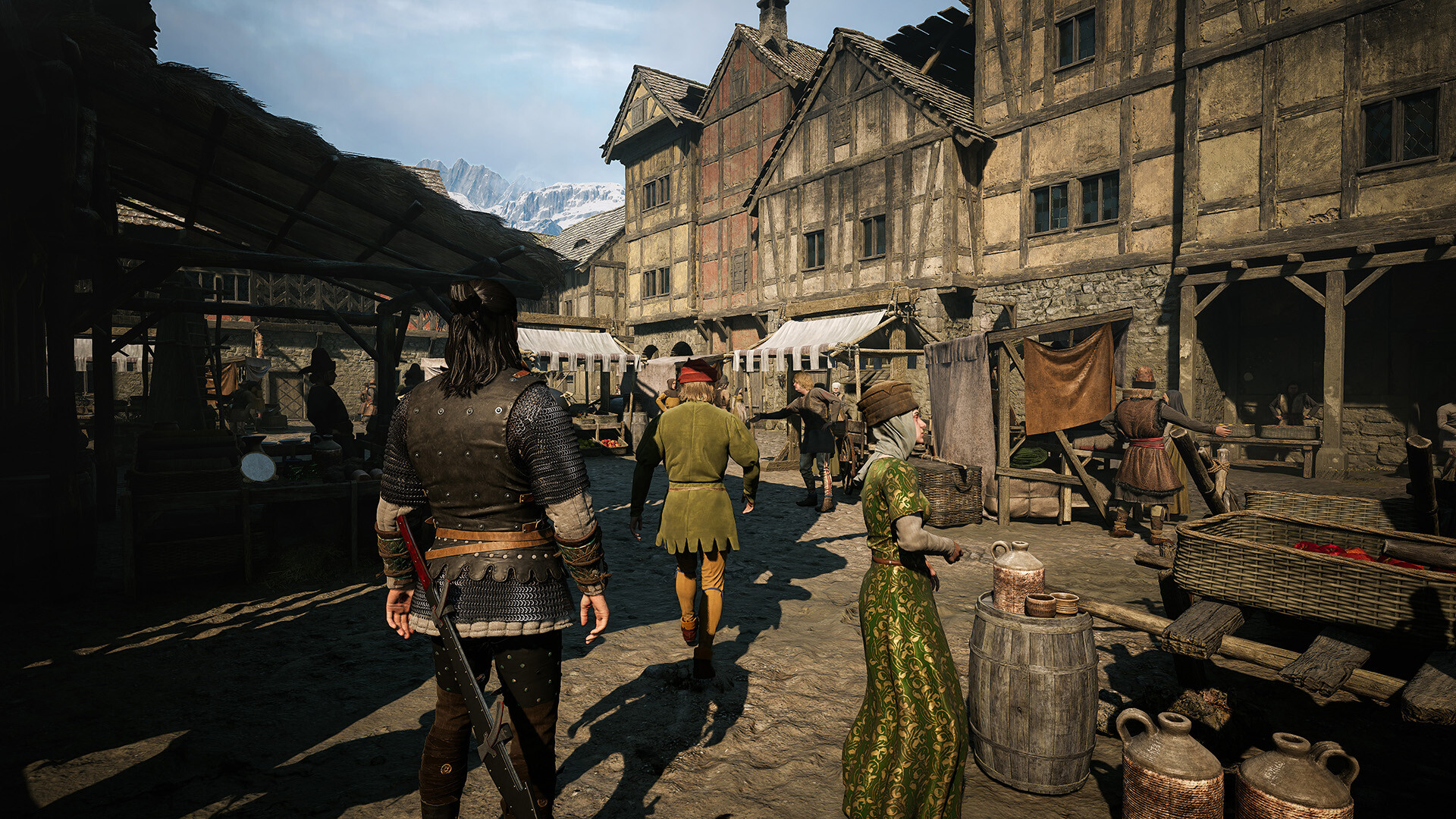
The prologue introduces us to Coen and his family. The year is 1347, and a plague is ravaging the world. Their home valley of Sangor has been seized by a powerful vampire named Brensis, who imposes his own laws and exacts a blood tribute from the locals. In exchange, the people have gained a quiet, albeit oppressed, existence and a cure for all ailments: vampire blood.
Unsurprisingly, the situation has caused Coen’s father to withdraw into himself and his mother to lose her sanity. That is how the prologue greets us—with Coen being killed and the game ending… But joking aside: the protagonist is turned into a vampire by the main antagonist. Coen’s family is abducted. Now, we have 30 days and nights before their execution.
The days and nights are divided into eight segments each. These segments are filled only when the player chooses to do something that advances the state of the world or develops the character. Quests, skill upgrades, important conversations, and exploration all consume time. The most I encountered took up six slots at once, though that particular quest was quite substantial and significant for the characters. Merely exploring the world or engaging in filler combat does not consume time. This offers freedom of choice without imposing rigid constraints. Yet, it forces you to ask yourself: is it worth helping these peasants? Clearing out that outpost? After all, the hero has a crucial objective. The decision is up to the player.
There isn’t enough time for everything. In return, however, the quests expand the lore and, one way or another, aid in the main objective. Eliminating Brensis—the game’s primary antagonist—is no easy task, even though it is theoretically possible to do so as early as the prologue. It would take a massive number of attempts, but in the end, even the villain himself would be surprised at how you managed to pull it off. So, you need to learn more about him and his regime. Knowledge is power. And Coen, having never left his village for most of his life, knows roughly as much as the player does.
Ultimately, the quests reveal more about both the characters inhabiting the Sangor Valley and the valley’s own history that turns out to be both rich and grim. An incredible number of quests are scattered across the valley, and almost all of them offer multiple ways to complete them. This variety, combined with the game’s timer, offers immense replayability. Furthermore, most quests are linked in some way to the main plot objective. I’m already planning a second playthrough; I’m curious to see how the events I took part in might unfold if I make different choices—and just how far the consequences might go.
The developers themselves emphasized that the world doesn’t stop turning if the player messes something up or kills a character. “Live in this cursed world you’ve created”—as the saying went in Morrowind. And I absolutely love that. The atmosphere is a whole other story. Eastern Europe, remote villages, forests, mud, the plague, and vampires. It’s all crafted with love. You walk through the woods half-expecting a grizzled witcher to appear, sort out all your problems, and maybe even give you a discount for a round of Gwent. But no. Absolute hell is breaking loose in this world, and it’s up to you to deal with the mess. And you know, hacking down the undead in a high-quality RPG is exactly what you need in the autumn.
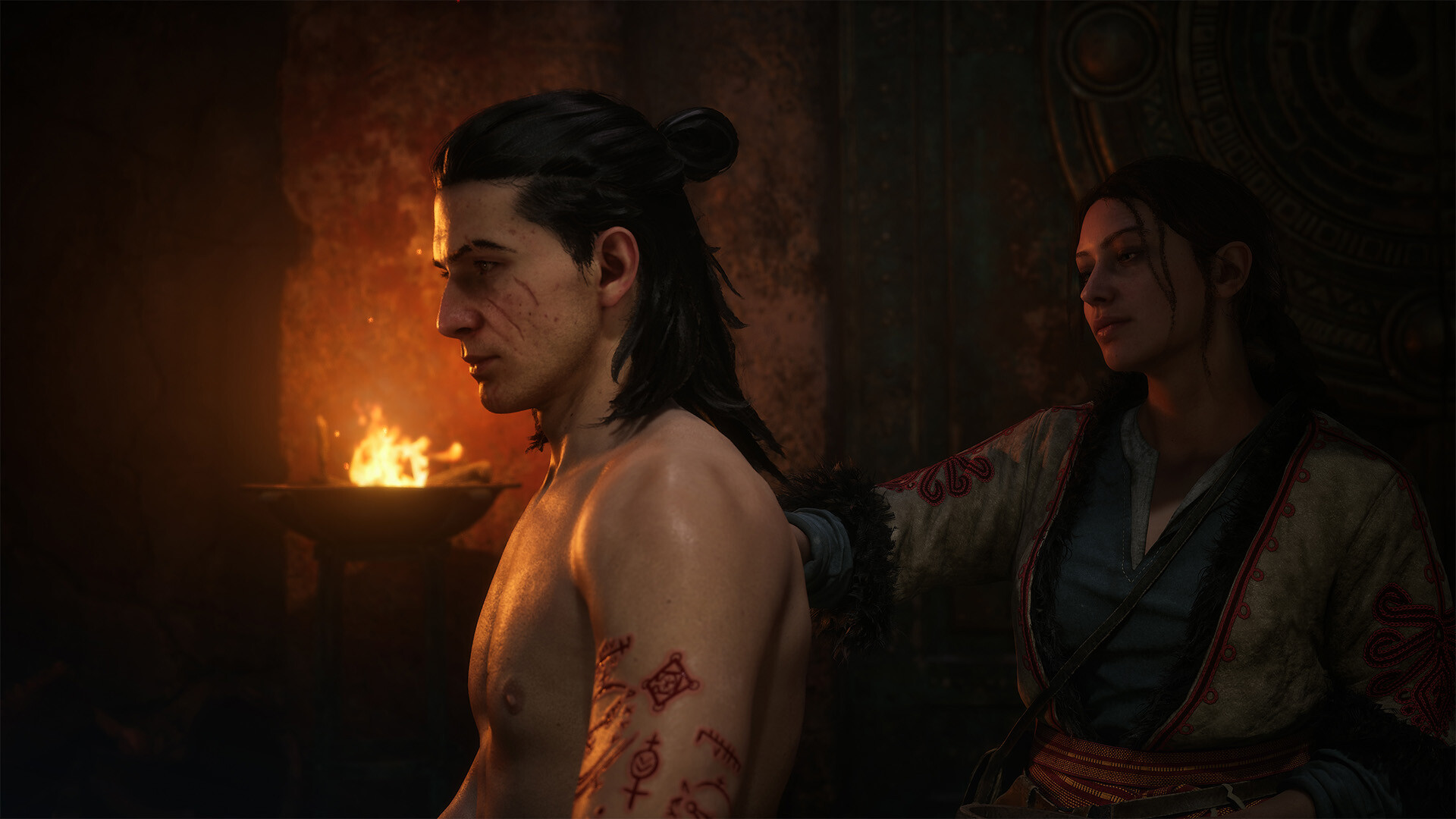
How does the game start, and why does the opening evoke such strange emotions? Because it is incredibly slow, sluggish, and unpleasant. It fails to hook you in. On the one hand, you have a sort of medieval realm hemmed in by mountains, where vampires run wild and demand blood tribute. But if a person is weak, frail, and sickly, they can’t provide enough blood, and what’s more, if their blood is of poor quality… The vampires’ attitude becomes basically: “Yeah, right. What are you even doing here? A useless resource.” And one such “useless resource” happens to be the protagonist’s mother.
Quests in The Blood of Dawnwalker aren’t just “go kill this, bring back that”… or rather, sometimes they are. But many of them are little stories involving morals, choices, and consequences. You can save some poor soul, or you can sell them out completely. You can help the peasants, or you can make a meal out of them, because you’re a vampire and you simply don’t care. The game doesn’t punish altruism, but it doesn’t reward it either; it simply allows the world to react.
I remember sneaking into a soldiers’ camp to talk to a quest NPC. I saw some poor guy getting beaten with clubs. I thought, “I’ll step in, defend him, maybe it’ll pay off later.” And guess what? Nothing of the sort happened. The whole camp turned on me. And mind you, they’d confiscated my sword at the entrance. I had to reload. Later, I saved another guy by punching a guard in the face. Once again, the whole mob of soldiers came after me. I thought, “Fine, have it your way.” I found a badass sword, slaughtered them all, and got absolutely nothing for it. That’s how it goes almost every time.
Some of the working laborers might exchange a friendly word, but the standard reaction is, “What the hell are you doing here? Nobody invited you.” Basically, if you feel the urge to play the superhero, it’s entirely your own internal drive, the game doesn’t really reward it. On the flip side, some quests start out as good deeds but end up steeped in that classic “gray morality.” Sometimes you’re used as a pawn so others don’t have to get their hands dirty, and you don’t even realize it.
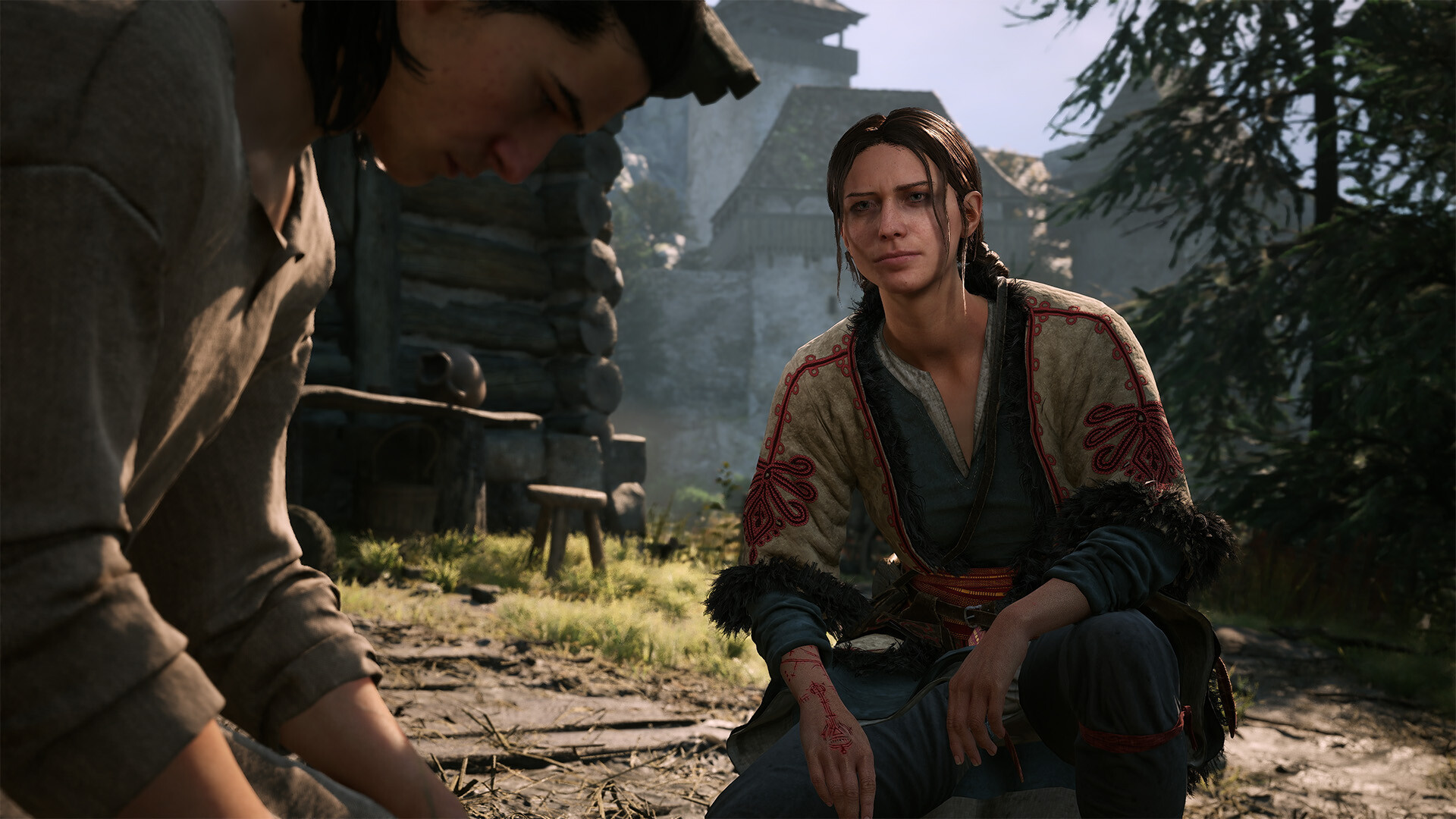
But I found my favorite quest in the local tavern. I walked into one of the inns, and a massive woman punched me in the face, hauled me out by the scruff of my neck, and decided to settle things one-on-one. After we’d thoroughly roughed each other up, it turned out to be some sort of ancient initiation rite. The lady herself was actually quite friendly and helpful. She introduced me to her friend—a prostitute—and together they gave me a quest to deal with a nasty pimp named Andrei. The reward was excellent, but there was one condition: I couldn’t kill him.
Anyway, if you evaluate the plot as a collection of narrative elements, The Blood of Dawnwalker sets a pretty high bar. It features a solid main story, a heap of interesting side quests with unexpected twists, and a vibrant open world that forces the player to play by its rules.
Perhaps the biggest narrative flaw is the protagonist. Coen turned out to be incredibly bland. I get that he was designed as a vessel for the player—someone to be filled with the player’s own decisions and moral nuances. But at the same time, he’s too naive and, at times, downright dim-witted; it’s as if he’s overacting. You just want to ask: “Dude, you live in a godforsaken village overrun by vampires who use blood as tax currency, right? Where are you getting all this self-righteous nobility?”
Actually, the answer is obvious. The developers are convinced that a game’s protagonist should, by default, be a “neutral-good” type. There’s a grain of truth to that, of course. But what happens in the actual gameplay is far more important.
And that’s where the ludonarrative dissonance kicks in. On one hand, I’m leveling up a vampire with absolutely no conscience—a guy who tears out the throats of everyone, not just soldiers but ordinary civilians, too. Fine. But then I meet up with Anka, and suddenly it’s all, “Do this favor,” or “Save those people.” Damn it, just give me some Paragon/Renegade system like in Mass Effect so I can actually have Renegade dialogue options. Let me become a vampire and rule this valley. But no, nothing like that changes. I can act like a total scumbag in the game, but then a dialogue starts and it’s all, “I’m so worried about you, Anka; you need my help. Oh God, you got kicked out of the convent? Let’s cry about it together.” This isn’t an RPG in any sense of the word. Sure, some quests can be solved in different ways, but the character’s personality doesn’t change at all. That’s the problem.
He’s a vampire, for crying out loud. He ought to be getting evil and cruel. Especially when the game shows you: look, he’s a level three vampire now, soon he’ll be level four, five, six, and so on. Something ought to change. But the game and the world just don’t care.
Now, let’s talk about the combat system. It’s unusual, somewhat reminiscent of the combat in Kingdom Come: Deliverance, and I personally like it. However, it needs some polishing.
The core concept involves the player choosing the direction for both attacks and blocks. Once you get the hang of it, the combat feels punchy and dynamic. Yet, much like in Kingdom Come, it falls apart when facing groups of enemies. Sure, you have a dodge move and a “spider-sense” mechanic that warns you of incoming attacks from behind, but the execution is a bit clunky. Target switching—since the game forces a lock-on to a specific foe during a fight—is chaotic. While dodging frequently, you can easily get stuck in a crowd of enemies or snagged on a fence, quickly sending you to a loading screen.
Ultimately, the main issue with the combat system is group encounters—and the sheer frequency of them. Skirmishes against crowds happen often, and in higher difficulty settings, they can easily become exhausting. When there are many enemies, they tend to get in each other’s way. Blocking one attacker guarantees you’ll take a hit from the guy next to him.
There aren’t many enemy types in the game; you’ll memorize their movesets within the first five hours. Visually, there isn’t much variety either: a few types of soldiers, animals, and creatures from Slavic folklore such as bears, boars, and wolves. And skeletons, which are mechanically identical to the soldiers, the only difference is their appearance. Because of this, the enemies start to feel repetitive after a few hours. It’s a minor issue, but it does detract from the overall experience.
There is magic, but it consumes health instead of mana. Personally, I used it to create distance when I needed to push an enemy back. There’s little point in spamming spells, since you’re already taking hits and casting drains your own health. Getting used to the system takes a bit of time at first; your fingers constantly fumble over which stick direction to press. But once you get the hang of it, most fights aren’t particularly difficult.
Even when the game warns you with a red skull icon that a formidable foe lies ahead, you’ll likely handle it without any heroic struggle—at least on medium difficulty. Things only get tricky when you’re up against five enemies instead of one. Even then, the combat doesn’t necessarily get harder; it just becomes more high-octane. Enemies don’t all swarm you at once; instead, they try to attack in turns. The challenge lies in parrying a surprise attack, striking the enemy who hasn’t moved yet, and then going back to wailing on your original target. Sure, it doesn’t look entirely realistic, but it’s the only way to keep the on-screen action stylish rather than a chaotic mess.
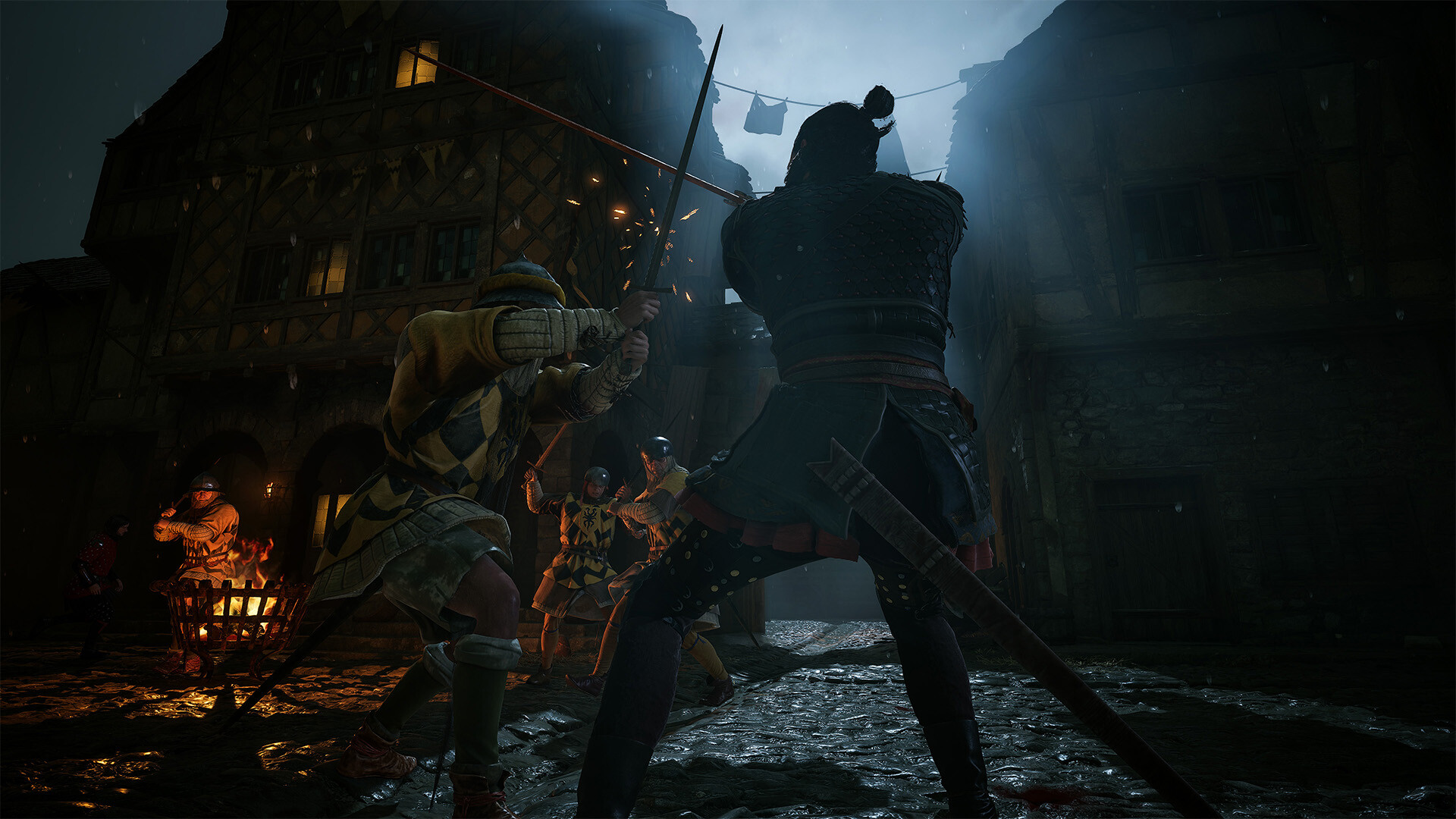
After the prologue, Coen transforms into a vampire—but not fully. Consequently, he is human by day and a vampire by night, allowing for two completely different playstyles. During the day, you rely on swordplay and magic. The magic system features a cool concept involving runes being carved into the body and bound with blood. At night, you use your sword, claws, and vampiric abilities. Magic is unavailable at night because vampire wounds heal faster than a spell can be cast.
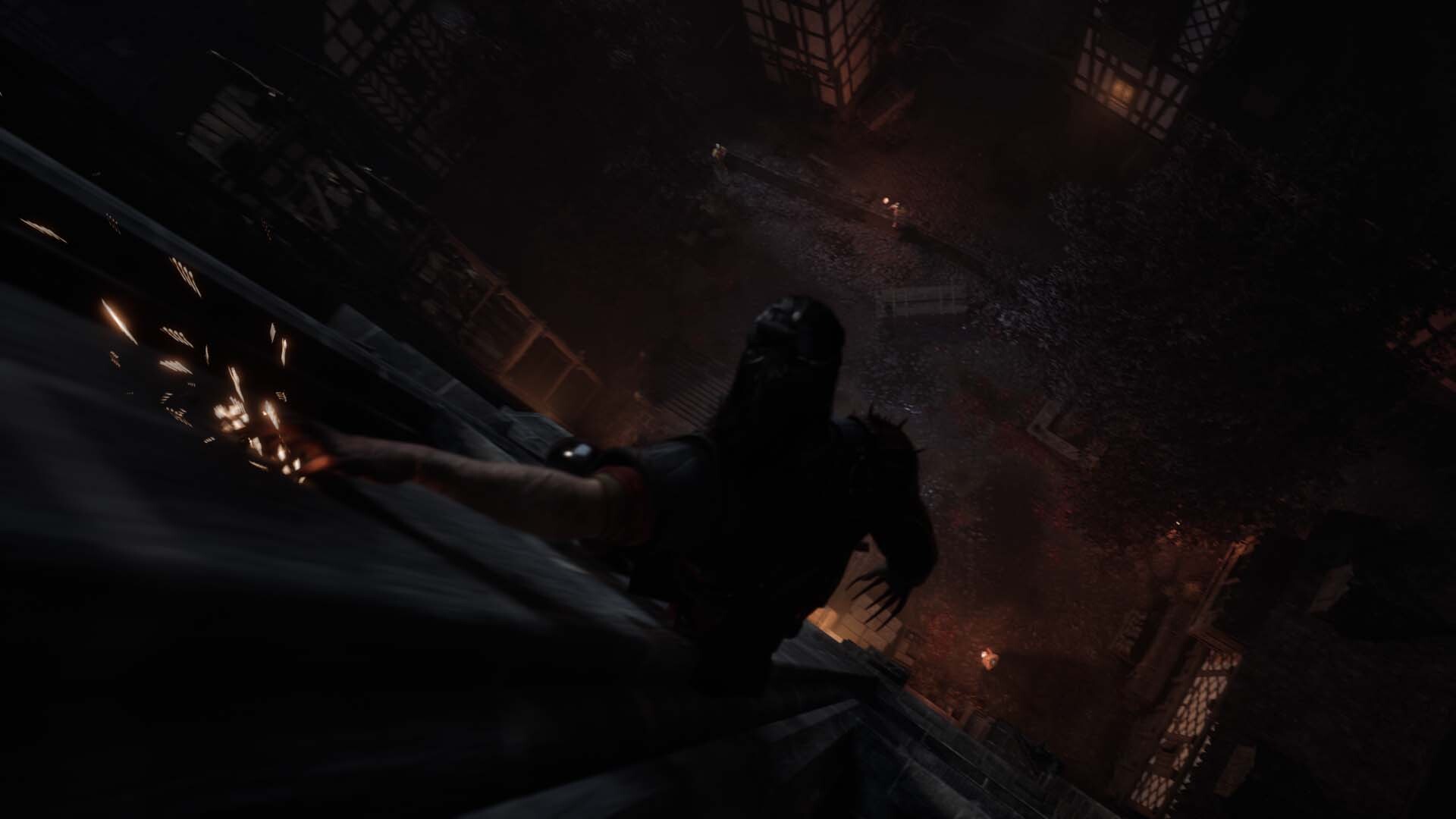
Combat in vampire form is a real blast. You are stronger, faster, and more agile, capable of fighting with both claws and a sword. The combat fundamentals remain the same, but the nuances differ. For instance, a human can heal by eating just about anything, whereas the monster form finds sustenance harder to come by. Sure, you can find blood potions here and there, but they are scarce. Be prepared to snack on enemies right in the middle of a fight. Cooldowns prevent you from overusing this tactic, but a soldier makes for a perfectly decent dinner. And that’s just one item on the menu; any living creature—from rats to deer—can end up on your fangs. You really don’t want to move around with low HP; in that state, Cohen becomes ravenously hungry and will devour any NPC who tries to strike up a conversation with you. Yes, literally any NPC. I actually broke a quest that way.
Another feature of the vampire gameplay is wall-running and teleportation. Special towers are scattered across the open map that can only be climbed while in vampire form, allowing you to scout out all nearby activities. Overall, the vampire form speeds up open-world exploration and unlocks new possibilities for combat, clearing outposts, and checking map markers. Some locations can be explored at any time of day, while others are accessible only at night. So, if you pass by one during the day, don’t forget to mark it so you can come back later.
And yet, strangely enough, I preferred playing as a human. Why? Because at night—surprise, surprise—it’s dark. Personally, I find playing in the dark really annoying, especially during combat. When fighting, I always keep an eye not just on the UI indicators, but also on where the enemy is attacking from, how they’re holding their sword, and where they’re aiming. In the dark, you simply can’t see those details. Maybe I’m just a noob who failed to find the local equivalent of a “Cat” potion. But honestly, I don’t understand why a vampire doesn’t naturally see as well in the dark as they do during the day. Instead, you’re forced to either carry a torch or activate “detective modes” just to make out anything in a dark basement or cave.
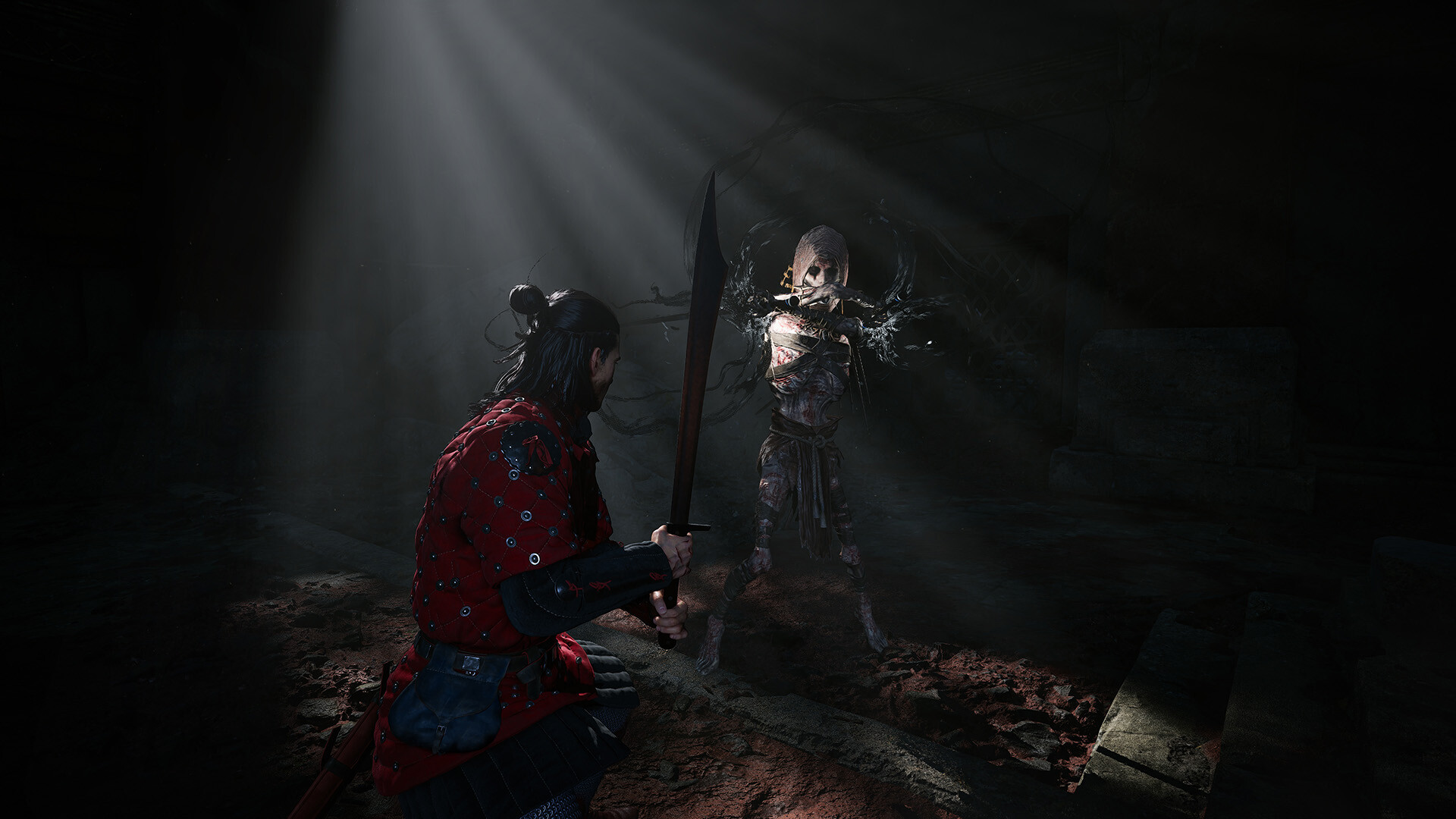
Since we’re on the subject of day and night, let’s talk about the game’s scarcest resource: time. You are given 30 in-game days to complete the journey. At first, that seems like plenty. But hours get consumed by practically everything. Leveling up skills takes time. Interacting with NPCs does, too, not to mention completing quests. Side missions can easily cost you two or three days. You only have a single day during the prologue, yet there are far more side missions available than that.
This implies that multiple playthroughs are necessary to experience all the content. It’s an approach that works perfectly for the game’s narrative. Figuratively speaking, you can no longer play Gwent irresponsibly while poor Ciri is in danger. The Blood of Dawnwalker forces you to set priorities. The counter in the corner of the screen stares reproachfully at you as it ticks away the days. Like it or not, you’re constantly aware that you’re just wandering the map clearing markers while your family is in trouble, and whether you’ll have enough time to save them remains a big question.
By the way, is it even worth clearing those markers? Well, for starters, you don’t really have a choice. You need to build up your reputation so the local bigwigs will accept you as one of their own. Secondly, if you caught a whiff of Ubisoft the moment you saw the towers, you weren’t imagining things. The game adopts the system from Assassin’s Creed, where you have to clear out several outposts—or intercept caravans, for instance—before you can reach one of the bosses. Fortunately, these quests are usually structured as mini-stories where you might stumble upon a helpful NPC or some interesting drama.
Among the superfluous open-world elements, I’d single out the need to constantly examine corpses. While this process wasn’t strictly necessary in The Witcher 3 either, it was at least justified by the fact that Geralt is something of a detective; The Blood of Dawnwalker, however, is far too obsessed with examining blood and guts.
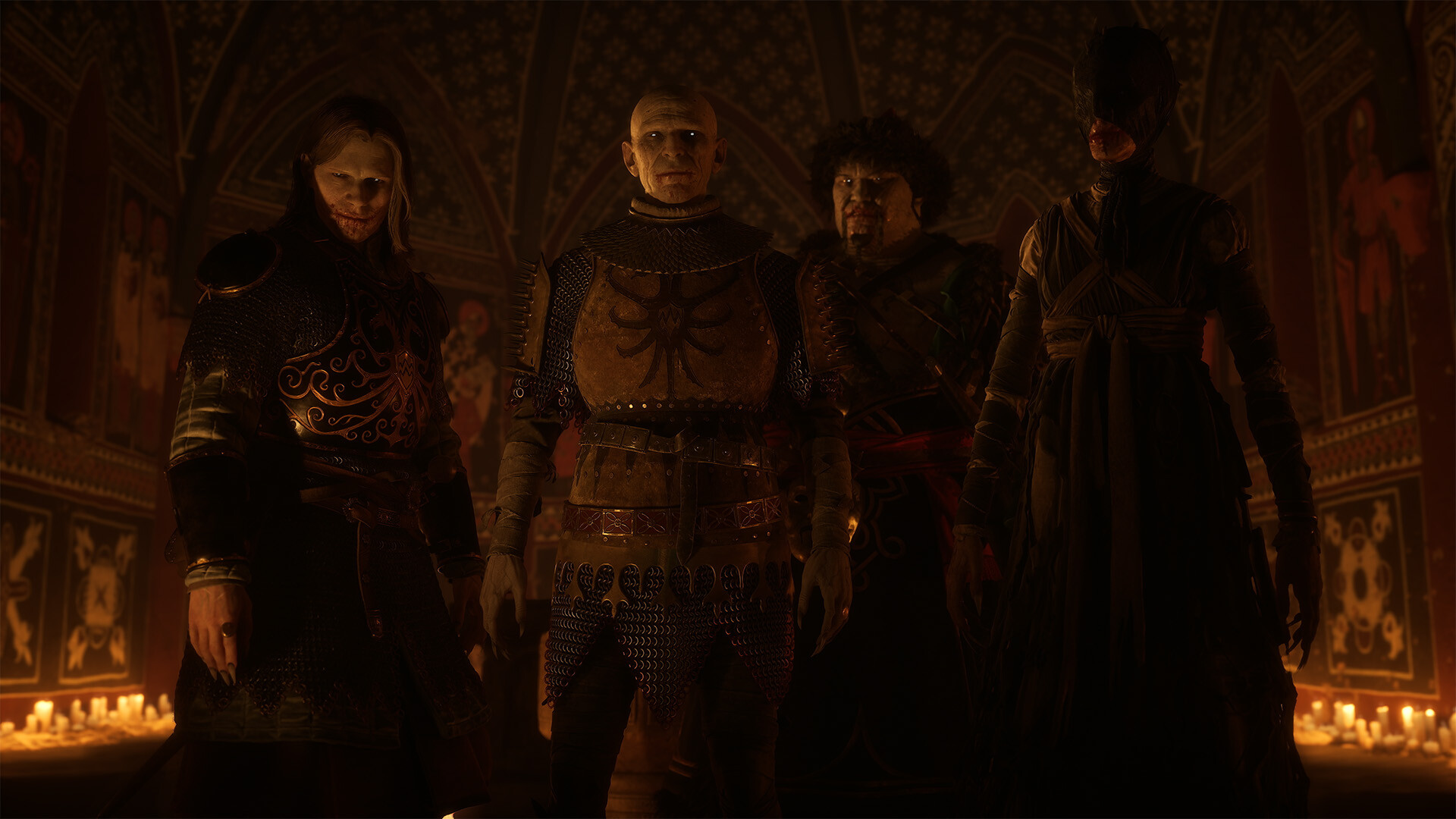
The Court system exists to track the impact of Coen’s actions on Brensis’s regime. It works roughly like this: Brensis has an entourage that divides up various duties. For instance, Ambrush handles blood deliveries to the castle, while Xanthe is responsible for training elite warriors. Failing to carry out these duties weakens the vampires’ grip on the valley.
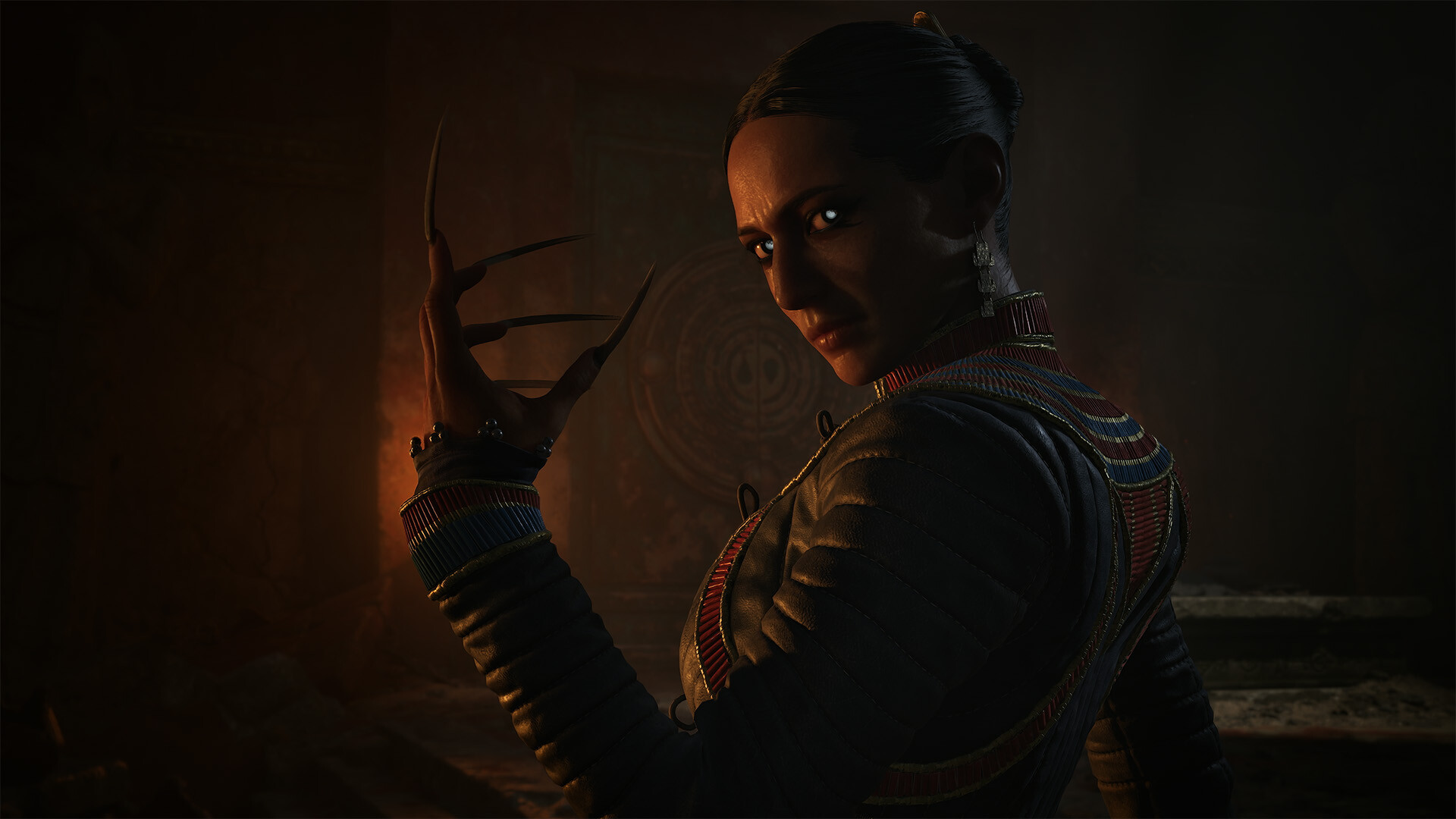
These actions are entirely optional. You can encounter members of the entourage in the open world—without engaging in the specific “influence-dismantling” quest chain—and kill them on the spot. However, if a vampire challenges Coen directly because of his actions, it opens up an opportunity to learn more about that vampire’s background and makes the eventual showdown easier. The antagonists are well-written; each has a unique backstory and motivation. At one point, I found myself wondering: was it really right to kill the entourage members? After all, Brensis is the true villain here, and the fate of the locals hinges solely on his death.
But Brensis won’t just sit idly by while his regime is destabilized and his subordinates slaughtered. Every move against his authority raises the “attention level,” making life increasingly difficult for Coen. By level 5, patrols multiply across the map, a curfew is imposed, and guards and civilians alike begin to recognize Coen on sight. This system adds another layer to the game’s immersive quality. The fact that it’s optional is a nice touch.
But here’s the catch. I ran into an interesting issue during my playthrough where I got absolutely torn to shreds. You see, there are these large diamond-shaped markers near each lieutenant. And beneath those large diamonds, there are a few little white dots. Each white dot represents one of these business operations. When you destroy a business—by smashing the barrels—that little white dot turns into a small gray ‘X’. I used to think that if there were three white dots under one of those squares and they turned into an ‘X’, it meant triggering some exciting story mission. But no: you simply shut down those three businesses, the square turns dark, and your notoriety level rises. Basically, the vampires start getting nervous; if that level hits a certain point, tougher enemy patrols start appearing in the open world. You know, because the vampires are on edge.
From what I gather—and what experts who’ve played further ahead say—a specific chain of story missions only unlocks once you’ve destroyed all the businesses belonging to a particular lieutenant, causing them to get rattled and step out of their lair.
The problem with this game is that grinding is essential; behind almost every one of those question marks, you find not just XP but also hidden tomes. These tomes unlock skill tree bonuses that you can then upgrade. You see, character progression here is locked behind the grind. No, first you have to find the tome. And if you want to boost that skill, you have to find that same tome again to upgrade it.
On top of that, upgrading certain skills takes time. And let’s not forget, dear friends, that our protagonist isn’t just any hero; as I mentioned, he’s a Witcher. Naturally, that means he has access to alchemy and can craft various concoctions—things like faster healing, quicker stamina recovery, or applying poison to his weapons. Yes, that’s in the game too. Of course, all of this requires recipes, which are also hidden behind those damn question marks—those side activities.
So, you find yourself facing a game world that essentially says: “Look, I’m just a mindless grind-fest”—but a really interesting one, thanks to its cool progression system. The system is somewhat reminiscent of Far Cry 3, where every activity point yielded something useful that boosted your stats. It wasn’t always about linear upgrades; you just got stronger overall. Here, you’ve got a Power Source, another Power Source, and then another—or a tome—and it all comes together into this engaging system that you can really tinker with. I’m using the word “grinding” in a positive sense here, because it’s how you leveled up and had fun. That’s why I love so many open-world games; I enjoy that process of tinkering with character progression.
But that time limit just kills any desire I have to keep going. It’s simply because I realize the game is saying: “We came up with this cool system for you to build your dream hero, but we’re going to take away your chance to unlock absolutely everything.” And where is that specific item located? Who the hell knows? You have no idea which question mark leads to which tome or recipe, or what kind of weapon you’ll end up with. You just show up for the mission, get something random, complete it, and then realize the reward doesn’t fit your playstyle at all… and that’s it. Damn it—I spent time (even if not a huge amount) on this quest or question mark, and what I got was completely useless…
Then you find merchants. Thank goodness for merchants—they offer the most valuable items. Regardless of what they’re called, the real prize is the tomes. You can buy them right away, provided you have the money. And, of course, to get the money, you have to grind. You have to go out and fight every soldier, every wretched wolf, and every bear. All their guts and scraps will come in handy eventually. You offload the junk and trash immediately, while naturally holding onto the crafting materials. You sell off your old, useless gear—swords, boots, coats—and use the proceeds to stock up on tomes and activate them. And then find yourself thinking, “Yeah, now I need experience points to actually level all this stuff up.”
But as you delve deeper into this world, it starts to get a bit tedious because it’s so uniform. It’s literally devoid of substance. You wander through the wilderness, but it brings you no joy because you’re just zooming right through it.
The natural environment is standard Unreal Engine 5 fare. It’s “stock,” if you will, basic. Or generic. Pick any adjective; it fits. For instance, the developers of Kingdom Come: Deliverance 2 managed to create a real sense of deep wilderness; when you looked at the forest, it actually felt impassable, full of pits, gnarled roots, and dense, confusing thickets. You’d look at it and think, “Nah, I’ll stick to the path, or I’ll get lost.” And never mind Kingdom Come—look at the recent Gothic remake. Even that had a believable forest, despite the map being much smaller than this one.
The developers even said, “This city holds many secrets.” They told us to look closely—to watch the people walking around, pick up on their hints, and let those leads guide us to all sorts of new missions. So, I arrive in this city and open the map. It marks a quest: “The Mysterious House.” You go into this mysterious house, find a little secret, and the quest is done. Then you open the map again… and there’s another mysterious house. And another one. This city hides so many secrets… it makes you want to burn it down.
And what about this quest here? You walk up, and guards are tormenting some poor soul. You get into a fight with the guards. It turns out you’ve just shut down part of another lieutenant’s business. It’s all just that simple—that primitive. And it ruins the game world; these “simplistic” quests don’t live up to the developers’ promises, and it’s infuriating.
Look, we have this huge map littered with question marks. Some of these question marks are marked as story quests involving shutting down business operations. They are all identical—literally. You show up, and no matter what you do, it’s always the same routine: arrive, take out a few grunts, and that’s it—quest complete, move on to the next. One, two, three, four, five… There’s no story, just hours of grinding.
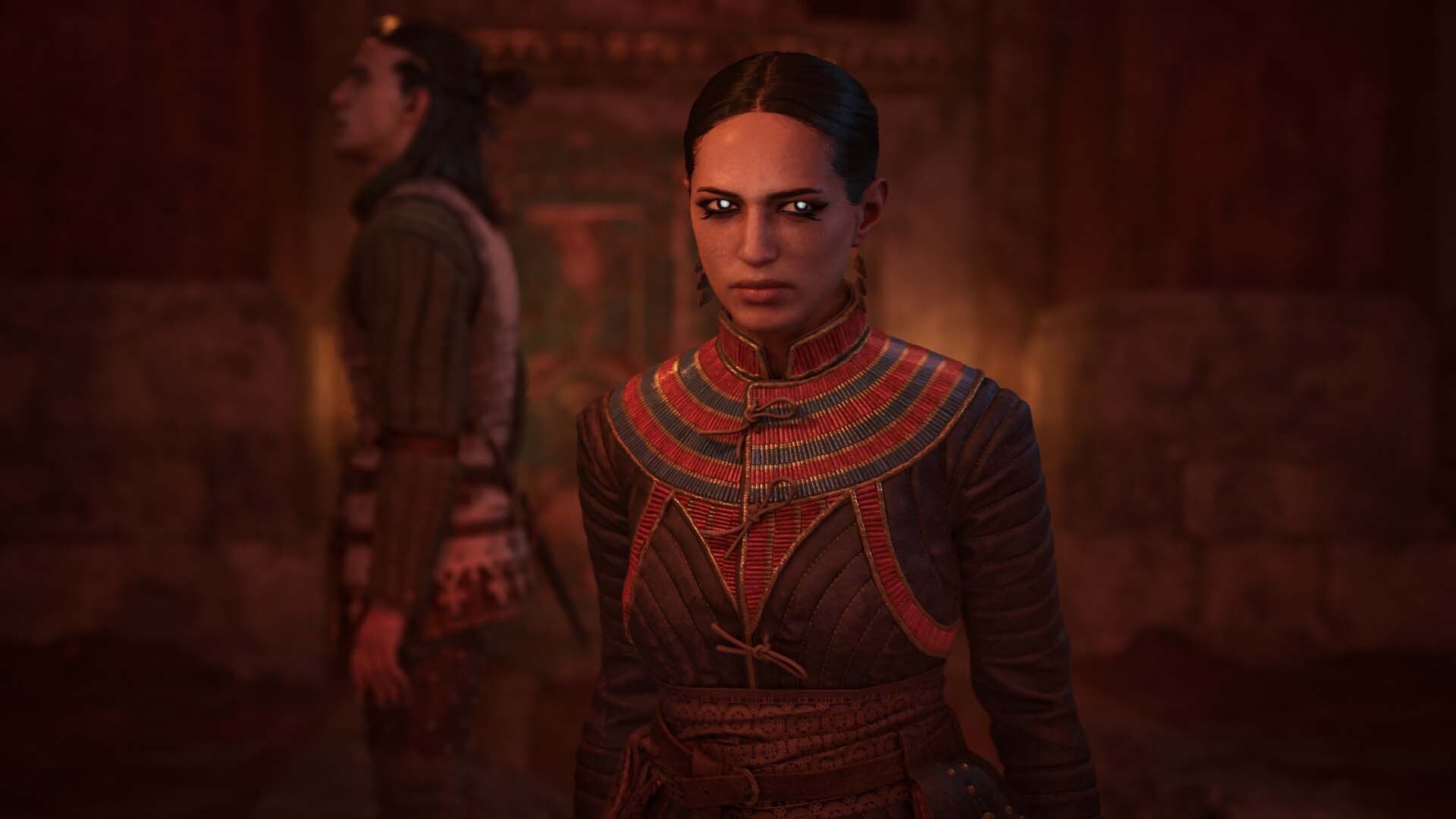
Built on Unreal Engine 5, the game suffers from the classic issues associated with this engine: mediocre performance, an inability to play properly without upscalers, and graphics that look grainy in places. Everyone and their dog has complained about this. On top of that, the animations are very jerky, which sometimes breaks immersion.
Visually—oddly enough—it really doesn’t look great. The game looks worse than The Witcher 3, yet it devours system resources like there’s no tomorrow. High-level optimization? Nope, never heard of it. Players are encountering technical bugs; some experienced crashes during shader compilation, and the developers advised those poor souls to update their BIOS. In short, the launch came with a significant caveat.
Cutscenes are locked to 30 FPS. The graphics are exactly on par with the generic Gothic remake, decent but nothing to get excited about. That said, I would praise the developers for the cutscenes. The direction is excellent, and the atmosphere of eldritch villages at the edge of the world is conveyed remarkably well. When it comes to horror and gloom that should chill you to the bone—believe me, they nail it.
Then there’s the price. A blatant AA project costs $70 at launch. Whether the game is worth the money is up to you and your wallet.
For its story, The Blood of Dawnwalker earns a solid eight out of ten. That is, of course, provided we consider not just the main narrative, but also the overall atmosphere and side quests. In today’s gaming landscape, few developers create open worlds as richly realized and detailed as this—worlds that spark genuine curiosity about what lies ahead.
I’d give the gameplay an eight as well. The game experiments not only with combat but also with its approach to open-world exploration, and it does so in a compelling way. Time constraints and gameplay mechanics that shift based on the time of day add excellent variety to the standard open-world formula.
However, I’d only give the graphics a six. I really don’t want to look at a game and immediately think, “Damn, is that the old Unreal Engine?” Yes, The Blood of Dawnwalker features impressive cutscenes and a cool medieval European atmosphere, but that’s just the standard these days. I’m still looking for something more. Ten years ago, even Velen looked visually more unique than the entire Sangor Valley put together.
Applying our magic formula, we arrive at a final score of 73.
Who will like it? Those who miss RPGs where choices actually matter. Those ready to explore the world on their own rather than following map markers. Those who want to experience a story rather than just clear the map. Those who enjoy tinkering with character builds and are willing to overlook technical flaws. Those willing to push through the opening hours to find something truly compelling later on.
Who won’t like it—those looking for a highly polished action game, unwilling to put up with UE5’s technical issues. Those expecting a narrative and character depth on par with The Witcher 3. Those unwilling to pay $70 for what feels like filler content.
The Blood of Dawnwalker is a concept that has yet to fully mature—perhaps it will in a future installment. For now, however, it is merely a mediocre open-world experience. It isn’t the best-looking game, yet it is incredibly resource-hungry. It feels like the game still has a long way to go; an “Enhanced Edition” will likely come along eventually to fix things. In any case, as I said, I don’t see a finished game here—I see a concept.
And yet, I can’t deny there’s something to it. Something that makes me want to play through it again. Something living within those grey forests, that timer, and that constant race against time. Maybe it’s just nostalgia for The Witcher. Or maybe it’s a spark that will eventually catch fire. For now, though, it’s a 73 out of 100. And I’ll be waiting to see what happens next.


